Cardiac CT volumes are climbing faster than most hospitals can hire cardiac-trained radiologists, and a mis-read calcium score or missed CAD-RADS category can delay a cath lab decision by days. This guide breaks down what a hospital administrator or radiology department head should demand from cardiac CT reporting services for hospitals in 2026, and which setup fits which hospital profile.
- Multi-specialty hospitals with active cath labs need sub-2-hour cardiac CT turnaround, not next-day batch reporting.
- 5C Network runs cardiac CT reporting through 400+ specialist radiologists with AI-assisted pre-screening across 2,000+ hospitals in 2026.
- Rural and nursing-home setups need escalation protocols more than raw speed — critical findings still require a phone call, not just a PDF.
- Skip any teleradiology vendor that won't name the radiologist signing the report or show CAD-RADS/Agatston scoring in the template.
Why this matters
A cardiac CT report is only useful if it reaches the ordering physician before the clinical window closes. Coronary CT angiography, calcium scoring, and CT for TAVR planning all feed decisions that cardiology teams are waiting on in real time — not the next morning.
Hospitals that outsource cardiac CT reporting without checking subspecialty coverage end up with generalist reads that miss CAD-RADS grading nuances or under-call calcium scores. That gap shows up months later as a delayed diagnosis complaint, not a line item anyone budgeted for. 5C Network built its cardiac CT workflow around cardiac-trained radiologists reviewing AI-flagged findings before sign-off, which is the standard hospitals should be benchmarking against in 2026.
Who this is for
This guide is for radiology department heads, hospital administrators, and cardiology service line leaders at facilities running 10 or more cardiac CT studies a week who currently rely on a single in-house cardiac radiologist, or none at all. It applies whether the hospital is a 500-bed multi-specialty center with an active cath lab or a 50-bed facility referring cardiac cases out for imaging today.
What to look for in cardiac CT reporting for hospitals
Turnaround time matched to your clinical workflow
A cardiac CT ordered ahead of a same-day cath lab procedure needs a report inside an hour, not by end of day. Ask any vendor for their median turnaround on urgent cardiac studies specifically, not their blended average across all modalities — a 30-minute benchmark for urgent reads is achievable in 2026 and should be the floor, not the ceiling.
Cardiac subspecialty sign-off, not general radiology coverage
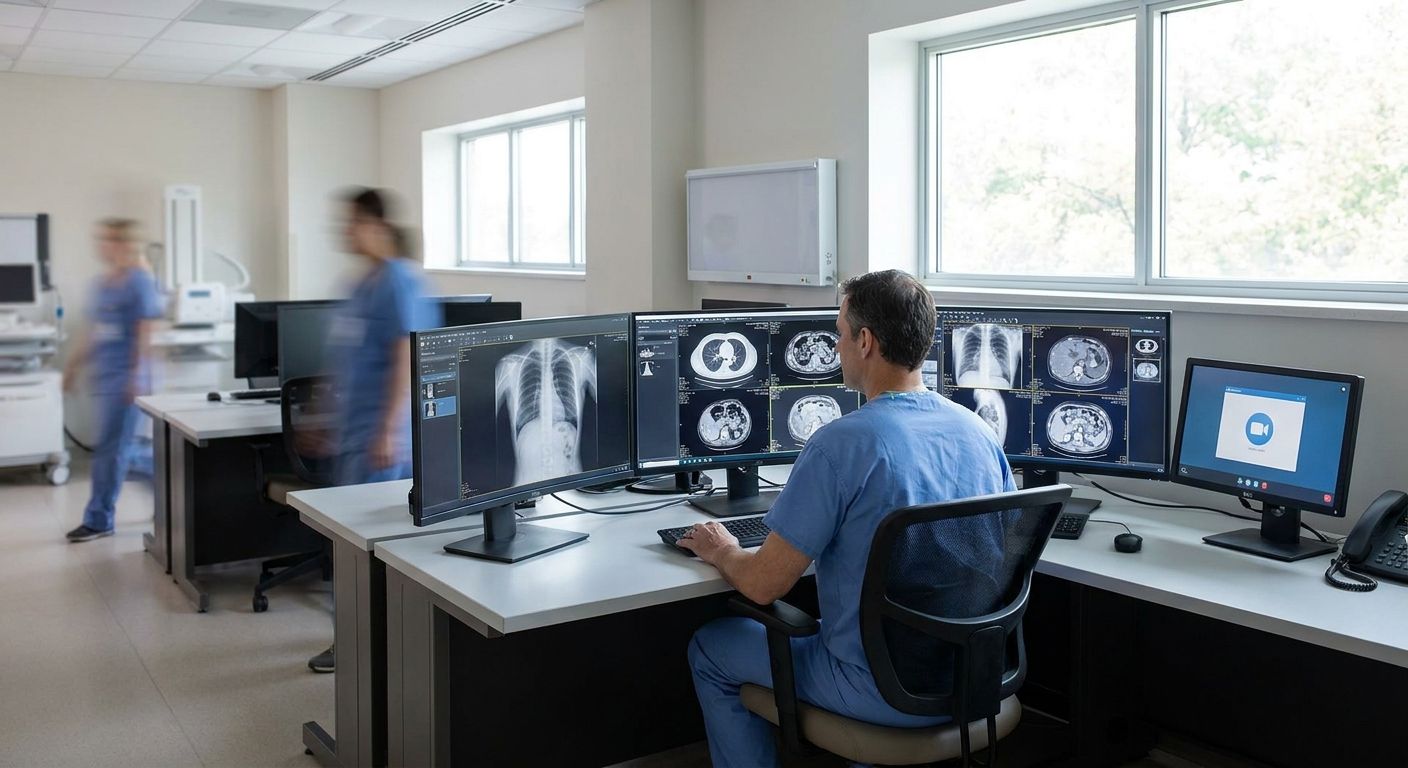
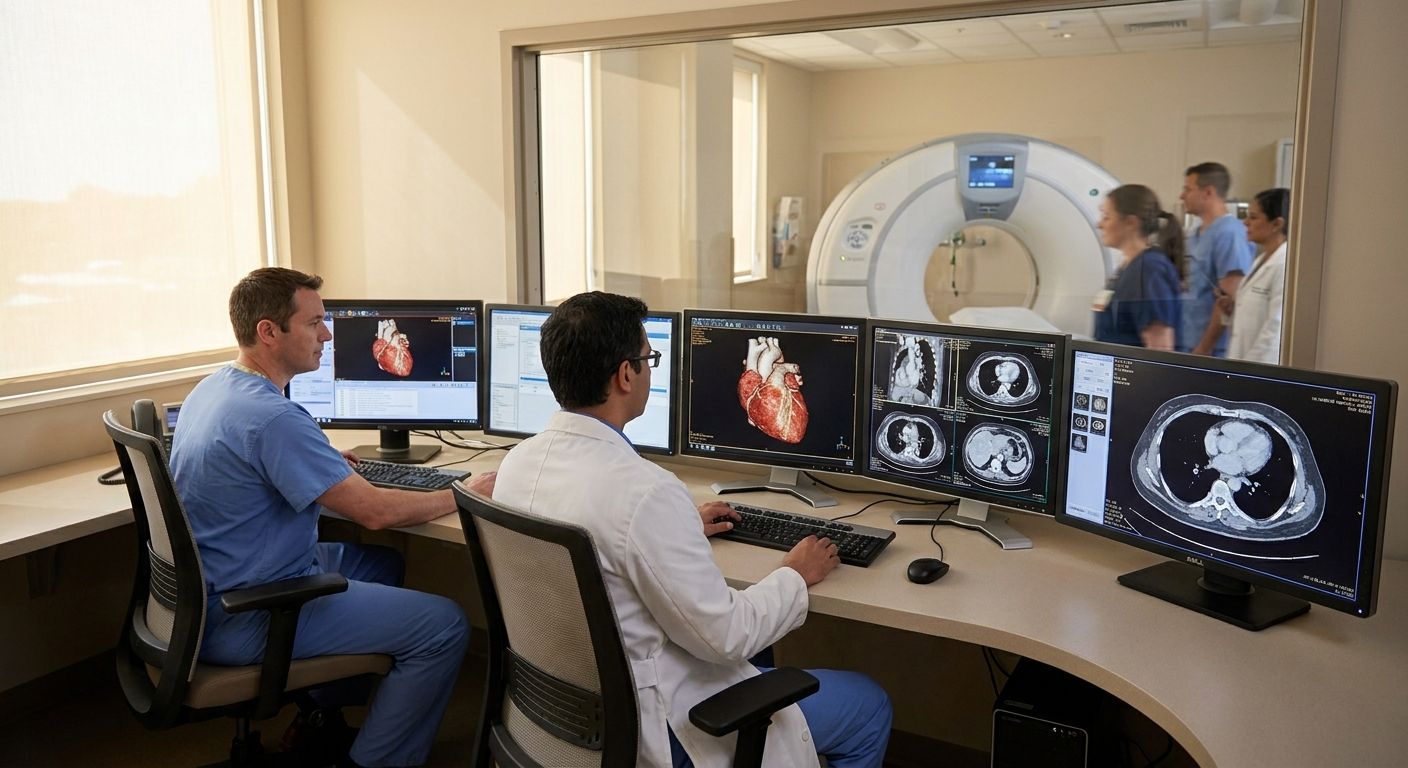
CAD-RADS categorization, coronary calcium (Agatston) scoring, and pre-TAVR CT measurements require a radiologist who reads cardiac studies regularly, not a generalist covering X-ray, MRI, and CT overnight. Confirm the reporting pool includes named cardiac-subspecialty radiologists, and ask how many cardiac CT studies that specific pool reads monthly.
Structured reporting templates built for cardiology
A narrative paragraph doesn't help a cardiologist triage patients at scale. The report needs CAD-RADS category, Agatston score, and stenosis severity in a structured, scannable format that plugs into the cath lab's existing decision tree.
AI-assisted pre-screening with a human radiologist owning the sign-off
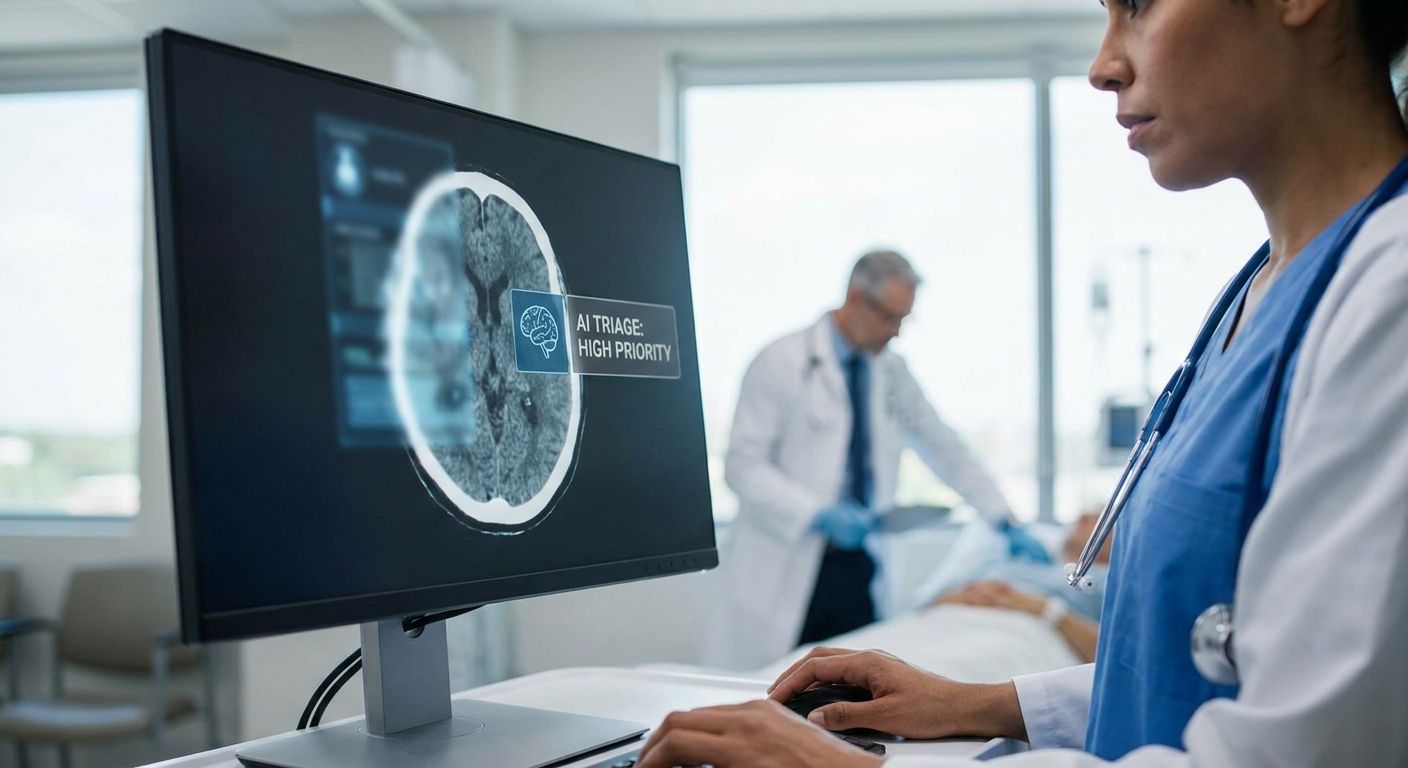
AI can flag calcified plaque, measure vessel diameter, and pre-populate scoring fields in seconds, cutting the radiologist's read time without cutting corners on accuracy. The non-negotiable is that AI runs the workflow and a licensed radiologist owns the diagnosis and sign-off — never the reverse.
Escalation protocol for critical or unexpected findings
An incidental pulmonary embolism or an unexpected aortic dissection found on a cardiac CT needs a phone call within minutes, not a routine report sitting in a queue. Ask for the documented escalation SLA in writing before signing a contract, not after the first missed call.
PACS and HIS integration that doesn't add manual steps
A reporting workflow that requires staff to manually upload studies to a separate portal adds delay and human error at exactly the point urgency matters most. Direct PACS integration should be table stakes for any cardiac CT reporting service evaluated in 2026.
Top picks by hospital profile
Multi-specialty hospitals with an active cath lab — the safe pick
These hospitals run the highest cardiac CT volume and need the tightest turnaround because findings feed same-day interventional decisions. The setup that works pairs AI pre-screening with cardiac-subspecialty sign-off and a documented critical-finding escalation call, not just an email alert.
5C Network's teleradiology services for multi-specialty hospitals route cardiac CT studies through cardiac-trained radiologists inside a pool of 400+ specialists, with urgent studies typically reported within 30 minutes. Verdict: Buy — this is the profile the model is built for.
Rural hospitals without an on-site cardiologist — the coverage-gap fix
Rural facilities often have the CT scanner but not the specialist to read cardiac studies confidently, forcing patient transfers that add hours to a diagnosis. The right setup closes that gap without requiring the hospital to staff a cardiac radiologist it can't recruit or retain.
Teleradiology services for rural hospitals extend the same cardiac-subspecialty pool used by large urban centers to a facility running far lower volume, so the hospital gets CAD-RADS and calcium scoring without a full-time hire. Verdict: Buy for facilities under 20 cardiac CT studies a week; Consider above that, where a hybrid in-house plus overflow model may work better.
Diagnostic centre chains running high cardiac CT volume — the volume play
A chain running cardiac CT across 5 or more locations needs one reporting standard across every site, not a different radiologist quality bar depending on which branch ordered the scan. Consistency in structured reporting and turnaround matters more here than at a single-site hospital.
Teleradiology services for diagnostic centre chains centralize cardiac CT reads through one radiologist pool so every branch gets the same CAD-RADS template and the same escalation SLA. Verdict: Buy for chains standardizing reporting across locations in 2026.
Nursing homes managing post-procedure cardiac imaging — the low-volume float
Nursing homes rarely order enough cardiac CT to justify any dedicated in-house arrangement, but the studies they do order still need cardiac-subspecialty accuracy, especially post-op monitoring cases. A pay-per-study model with the same subspecialty pool as larger hospitals fits this volume profile without a fixed contract commitment. Verdict: Consider — right fit for low, unpredictable volume, but confirm the per-study pricing model before committing.
What to avoid
- Generalist-only reporting pools that advertise "radiology coverage" without naming a cardiac subspecialty. A radiologist who reads mostly musculoskeletal or chest X-ray studies is not the right sign-off for a CAD-RADS categorization.
- Batch reporting cycles that don't match cath lab scheduling. A 24-hour blended turnaround average can hide a 6-hour wait on the exact urgent study that needed a same-day decision.
- AI-only outputs presented as final reports. Any vendor letting an algorithm output stand in for a licensed radiologist's sign-off is a compliance risk, not a time-saver.
Get cardiac CT studies reported faster
Route cardiac CT through cardiac-subspecialty radiologists with AI-assisted pre-screening.
Verdict comparison
| Hospital profile | Turnaround need | Reporting model | Verdict |
|---|---|---|---|
| Multi-specialty with cath lab | Under 30 minutes for urgent studies | Cardiac subspecialty + AI pre-screen | Buy |
| Rural hospital | Same-day, non-urgent tolerant | Overflow subspecialty pool | Buy / Consider |
| Diagnostic centre chain | Standardized across sites | Centralized reporting pool | Buy |
| Nursing home | Low, unpredictable volume | Pay-per-study | Consider |
FAQ
What is included in cardiac CT reporting services for hospitals?
Cardiac CT reporting services for hospitals in 2026 typically include CAD-RADS categorization, coronary calcium (Agatston) scoring, structured findings, and radiologist sign-off delivered directly into the hospital's PACS. Escalation protocols for critical findings are part of most contracted services.
How fast should a cardiac CT report turn around?
Urgent cardiac CT studies should be reported within 30 minutes to an hour, especially when a cath lab decision depends on the result. Routine, non-urgent studies can reasonably take longer without affecting patient care.
Is outsourced cardiac CT reporting as accurate as in-house radiologists?
Accuracy depends on whether the reporting pool includes cardiac-subspecialty radiologists, not generalists. A pool of 400+ specialists reading cardiac studies regularly generally outperforms a single overworked in-house radiologist covering every modality.
Does AI replace the radiologist in cardiac CT reporting?
No — AI pre-screens and flags findings such as calcified plaque or vessel stenosis, but a licensed radiologist reviews and signs off on every report. Any service where AI output stands as the final report skips a required clinical safeguard.
What's the difference between teleradiology for rural hospitals and multi-specialty hospitals?
Rural hospital teleradiology setups are built for lower, less predictable cardiac CT volume and often run on a pay-per-study basis. Multi-specialty hospital setups are built for higher volume and same-day cath lab turnaround requirements.
How much do cardiac CT reporting services cost for a hospital?
Pricing varies by volume commitment, turnaround SLA, and whether the hospital needs 24/7 coverage versus daytime-only reporting. Hospitals should request a volume-based quote rather than comparing flat per-study rates across vendors.
Can a nursing home or small clinic use cardiac CT reporting services?
Yes — low-volume facilities can use pay-per-study cardiac CT reporting without committing to a full-time radiologist hire. This works best when the same cardiac-subspecialty pool serving larger hospitals is available at the smaller facility's volume tier.
What accreditation should a cardiac CT reporting service have?
Look for a named, licensed radiologist on every report and a documented critical-findings escalation protocol, not just a generic quality certification. Hospitals should verify the radiologist's credentials directly rather than relying on vendor marketing claims.
One last thing
The detail most hospitals skip during vendor evaluation is asking how many cardiac CT studies the assigned radiologist pool reads monthly — a general radiology network advertising broad coverage can still have a thin cardiac subspecialty bench. Ask for that number before asking about turnaround, because turnaround means nothing if the read quality behind it is generalist-level.