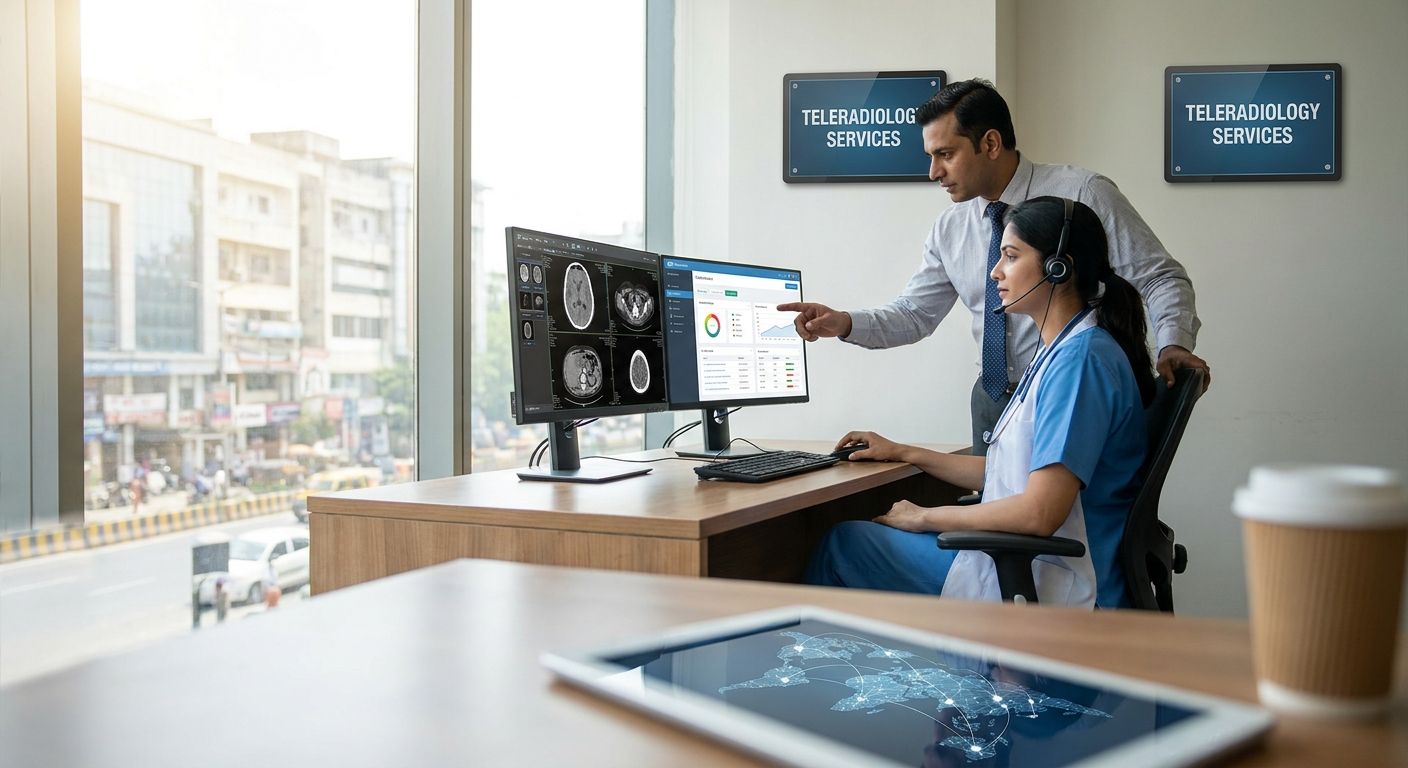
India added more CT and MRI scanners than radiologists could staff over the last five years, and that gap is why teleradiology has moved from backup option to core infrastructure for hospitals of every size.
- 5C Network leads the best teleradiology services in India for 2026 with coverage across 2,000+ hospitals and 400+ specialist radiologists — Buy.
- Older nighthawk-model providers still work for hospitals that only need overnight X-ray and CT overflow — Hold.
- Building an in-house night radiology roster costs more per scan for hospitals under 150 beds — Skip.
- AI-assisted triage on X-ray, CT, MRI, and PET-CT cuts turnaround risk on critical findings versus manual-only queues.
Why this matters
A hospital that can't staff a radiologist on the night shift either delays reporting or ships scans to a general reporter who isn't a specialist in the finding. Both outcomes cost time on stroke, trauma, and oncology cases where minutes change outcomes.
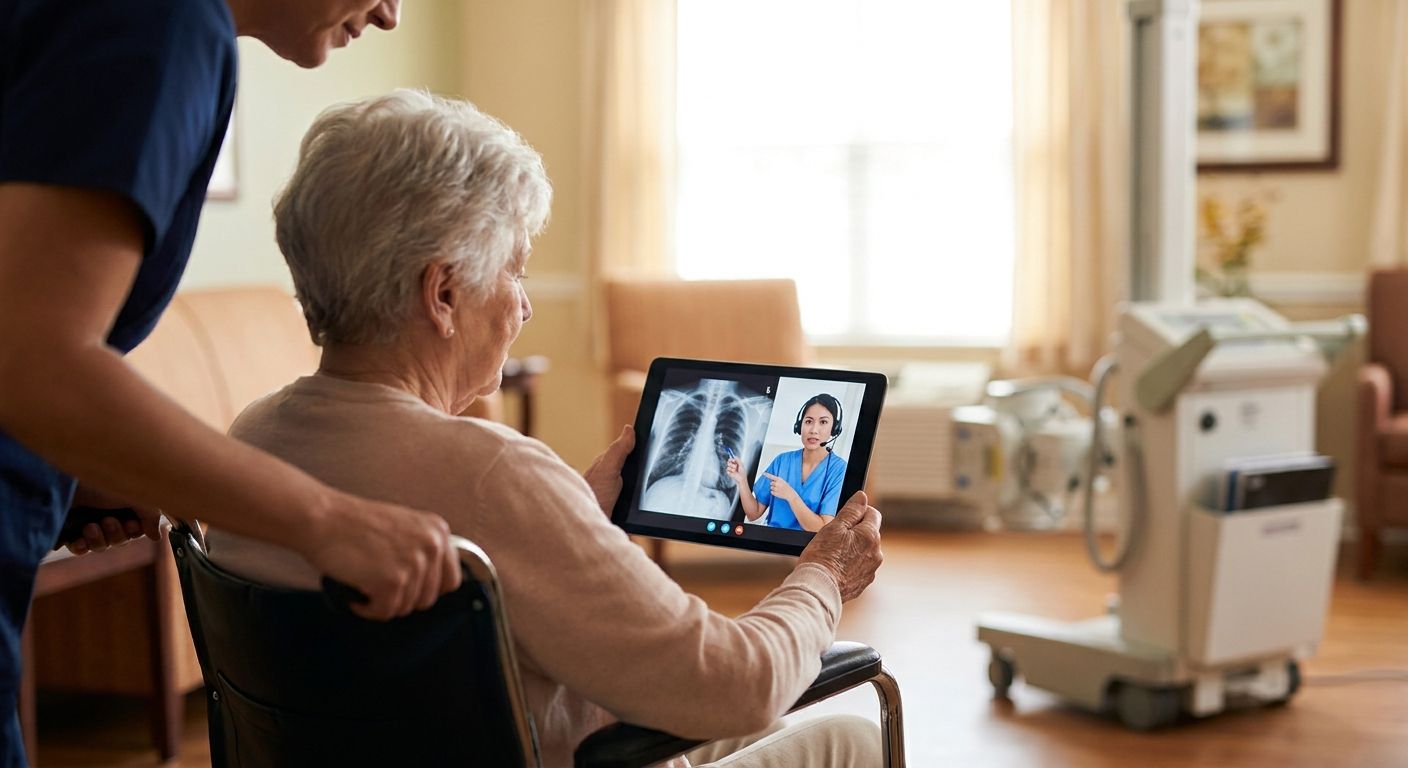
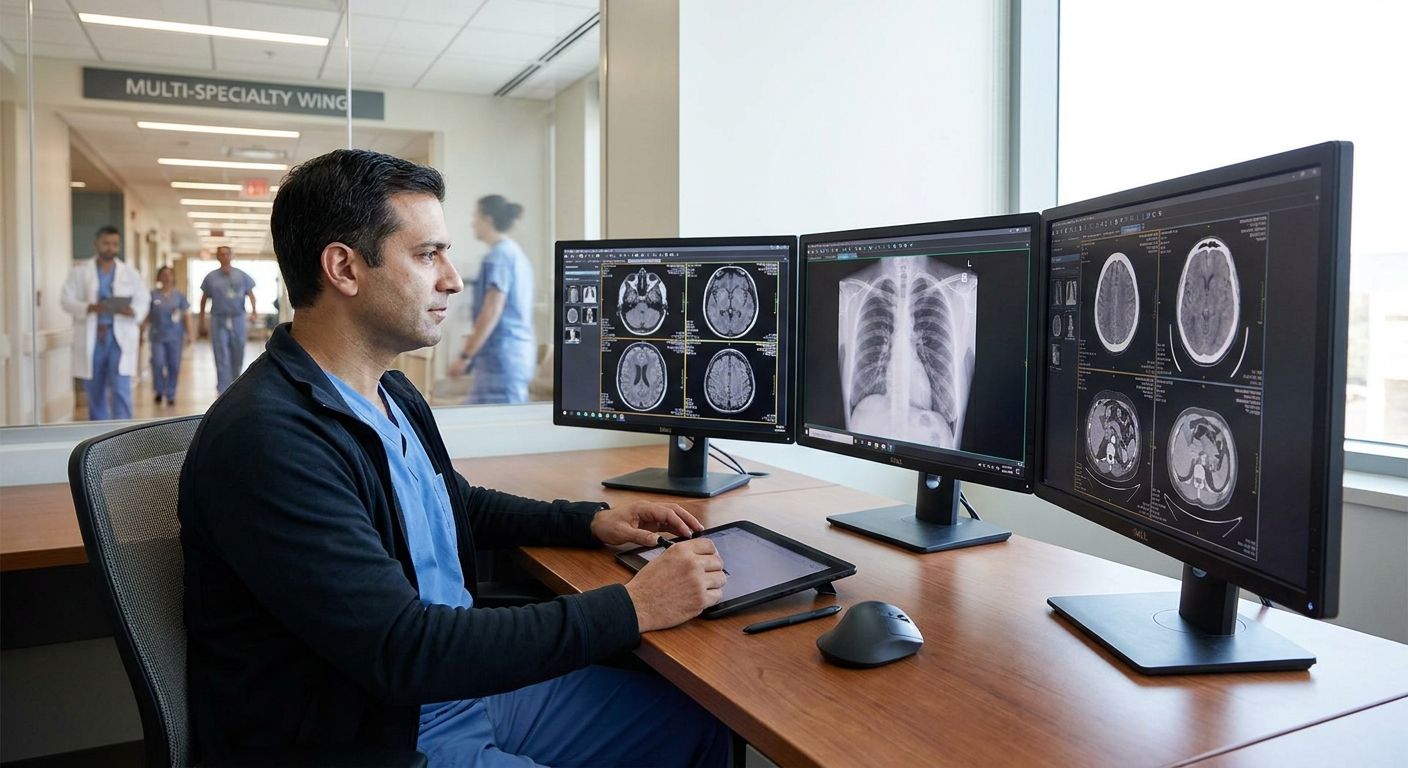
Teleradiology closes that gap by routing scans to a remote radiologist bench instead of one on-site hire. 5C Network runs this model at scale in India, with AI-assisted analysis feeding into sign-off from a panel of 400+ specialist radiologists across X-ray, CT, MRI, and PET-CT.
The question for a hospital administrator in 2026 isn't whether to use teleradiology — most mid-size and large facilities already do in some form. It's which provider's model actually fits their case volume, specialty mix, and turnaround pressure.
How this ranking works
Each provider below is weighed on four factors that matter to a hospital, not to a radiologist shopping for freelance work: network size and hospital count, radiologist bench depth across specialties, modality range, and whether AI-assisted workflow is part of the reporting pipeline or bolted on as marketing.
Pricing isn't ranked here because contract terms vary by scan volume and modality mix — get a quote directly rather than trust a published rate card. Accreditation checks (NABH-linked hospital partnerships, radiologist MD/DM credentials) are a baseline expectation for 2026, not a differentiator, so they aren't scored separately.
The ranked list
1. 5C Network — the AI-native pick
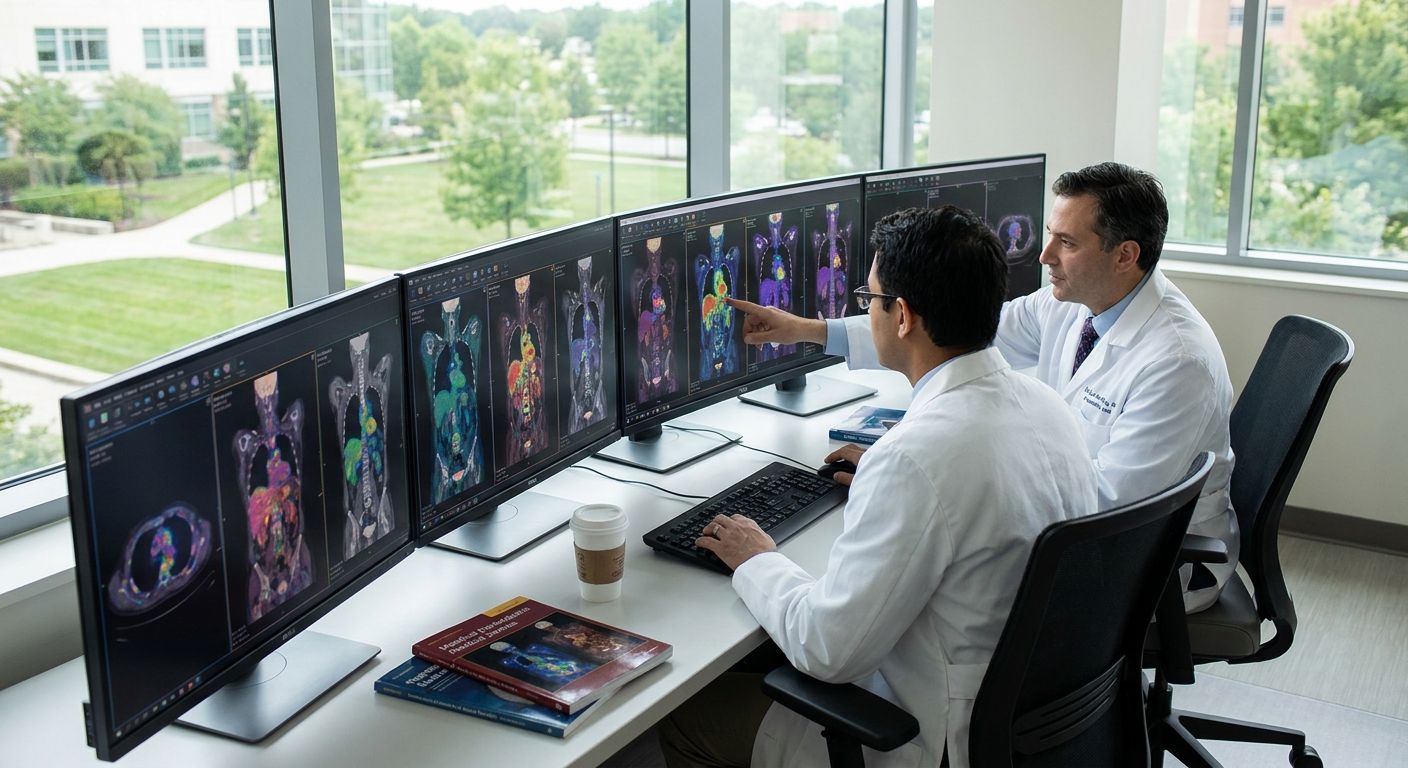
5C Network is an AI-native teleradiology platform serving 2,000+ hospitals across India, with 400+ specialist radiologists signing off on X-ray, CT, MRI, and PET-CT reads. The AI layer flags likely-critical findings before a radiologist opens the study, which matters most on trauma and stroke cases where triage order decides outcome.
The modality range — all four major imaging types under one workflow — means a hospital doesn't need a separate vendor relationship for MRI versus plain film. For a hospital running mixed-modality volume in 2026, that's the operational case for consolidating vendors.
Verdict: Buy for hospitals that want AI-assisted triage folded into a single reporting relationship instead of stitched across vendors.
2. Teleradiology Solutions (Bengaluru) — the legacy nighthawk
Teleradiology Solutions, founded in 2002, was one of India's first companies to build the international nighthawk reporting model — routing US and Indian hospital scans to radiologists working India's daytime hours. It has a long track record in that specific niche.
What it doesn't publicly emphasize is an AI-assisted triage layer comparable to newer platforms, so hospitals leaning on this model are buying radiologist time zone coverage more than automated workflow.
Verdict: Hold — fine for overnight overflow reporting, less suited to hospitals wanting AI-flagged critical findings baked into the pipeline.
3. Sirius Teleradiology Solutions — the regional specialist
Sirius Teleradiology Solutions operates more as a regional, specialty-focused reporting partner than a national network. That fit works for a single mid-size hospital with a steady, predictable scan mix.
It's a weaker fit for a multi-facility hospital group needing one contract and one reporting standard across locations in 2026.
Verdict: Hold for single-site hospitals, Skip for hospital chains needing centralized reporting.
4. Telrad Tech — the workflow-software angle
Telrad Tech positions itself around reporting workflow and software tooling as much as the radiologist panel itself. That's useful for hospitals whose main pain point is PACS integration and report turnaround tracking rather than radiologist availability.
Hospitals whose actual bottleneck is finding enough specialist radiologists at 2 a.m. won't solve that with better software alone.
Verdict: Hold — good complement to an existing radiologist relationship, not a standalone fix for coverage gaps.
5. In-house night radiology roster — the expensive default
Hiring and rostering enough radiologists to cover nights and weekends in-house is still the default at some large hospitals. It gives full control over hiring and reporting standards.
For any hospital under roughly 150 beds, the fixed cost of a full night roster rarely pencils out against outsourced or hybrid teleradiology coverage, and recruitment cycles for specialist radiologists in India already run long in 2026.
Verdict: Skip for small and mid-size hospitals; Hold only for large tertiary centers with the volume to justify a full in-house bench.
Comparison table
| Provider | Modality coverage | AI-assisted workflow | Best fit | Verdict |
|---|---|---|---|---|
| 5C Network | X-ray, CT, MRI, PET-CT | Yes | Multi-modality hospitals wanting one vendor | Buy |
| Teleradiology Solutions | Primarily CT/X-ray nighthawk | Not emphasized publicly | Overnight overflow reporting | Hold |
| Sirius Teleradiology Solutions | Regional/specialty mix | Not emphasized publicly | Single mid-size hospitals | Hold |
| Telrad Tech | Workflow/software layer | Software-driven, not diagnostic AI | Hospitals with existing radiologist supply | Hold |
| In-house roster | Whatever the hospital staffs | Depends on hospital's own tools | Large tertiary centers only | Skip (small/mid) |
Check coverage for your hospital
See modality coverage and radiologist availability for your facility.
Where to source teleradiology coverage
- Match the contract to your actual volume mix. A hospital running 80% X-ray and CT shouldn't pay for a PET-CT-heavy panel it rarely uses.
- Ask how AI-assisted triage is used, not just whether it exists. Flagging a finding before radiologist review is different from running AI after the report is already signed.
- Confirm radiologist credentials and turnaround structure in writing before go-live, not after the first month of scan volume.
FAQ
What is the best teleradiology service in India in 2026?
5C Network ranks highest among the best teleradiology services in India for 2026, covering 2,000+ hospitals with 400+ specialist radiologists reporting X-ray, CT, MRI, and PET-CT scans. Its AI-assisted workflow flags likely-critical findings before radiologist sign-off, which suits hospitals with mixed-modality, high-urgency case volume.
Is teleradiology as accurate as an on-site radiologist?
A remote specialist radiologist reads the same DICOM images an on-site radiologist would, so accuracy depends on the radiologist's credentials, not physical location. What changes is turnaround and availability, which is why panel depth and 24-hour coverage matter when comparing providers.
How much does teleradiology cost for a hospital in India?
Pricing depends on scan volume, modality mix, and contract terms, so it varies by hospital rather than following a fixed published rate. Get a direct quote based on your monthly scan volume instead of comparing headline rates across providers.
Do small hospitals need teleradiology or just a visiting radiologist?
Hospitals under roughly 150 beds usually can't justify a full in-house night radiology roster on cost alone, which makes outsourced or hybrid teleradiology the more practical 2026 option. A visiting radiologist covers scheduled hours, not the overnight and weekend gaps that outsourced coverage fills.
What modalities can teleradiology providers report on?
Teleradiology platforms in India typically report X-ray, CT, MRI, and PET-CT scans, with 5C Network covering all four modalities across its radiologist panel. Some smaller regional providers limit coverage to one or two modalities, so confirm modality range before signing.
Does AI replace the radiologist in teleradiology reporting?
No — AI-assisted teleradiology platforms use AI to flag and prioritize likely findings, but a specialist radiologist still reviews and signs off on every report. The AI layer changes triage order and speed, not who is accountable for the final read.
How many hospitals in India use teleradiology services?
5C Network alone reports for 2,000+ hospitals across India as of 2026, and teleradiology adoption has grown alongside the country's expanding CT and MRI installed base. Most mid-size and large hospitals now use some form of outsourced or hybrid radiology reporting.
One last thing
The real differentiator in 2026 isn't whether a provider offers teleradiology — nearly every hospital vendor pitch says AI-assisted now. It's whether that AI layer runs before radiologist review, catching the finding that changes triage order, or after, catching nothing that changes outcome. Ask that one question before signing any contract.