Multi-specialty hospitals running neuro, cardiac, oncology and emergency imaging under one roof can't afford a teleradiology partner built for single-modality volume — this guide breaks down what to check before signing a reporting contract in 2026.
- 5C Network reports 15,000+ scans daily across 2,000+ hospitals with AI-assisted triage — Buy for multi-specialty volume.
- 30-minute average turnaround and 400+ specialist radiologists cover neuro, MSK, cardiac and oncology reads without staffing gaps.
- Skip single-radiologist remote arrangements once monthly volume crosses a few thousand studies across specialties.
- In-house night float alone can't match the structured reporting depth teleradiology services for multi-specialty hospitals need in 2026.
Why this matters
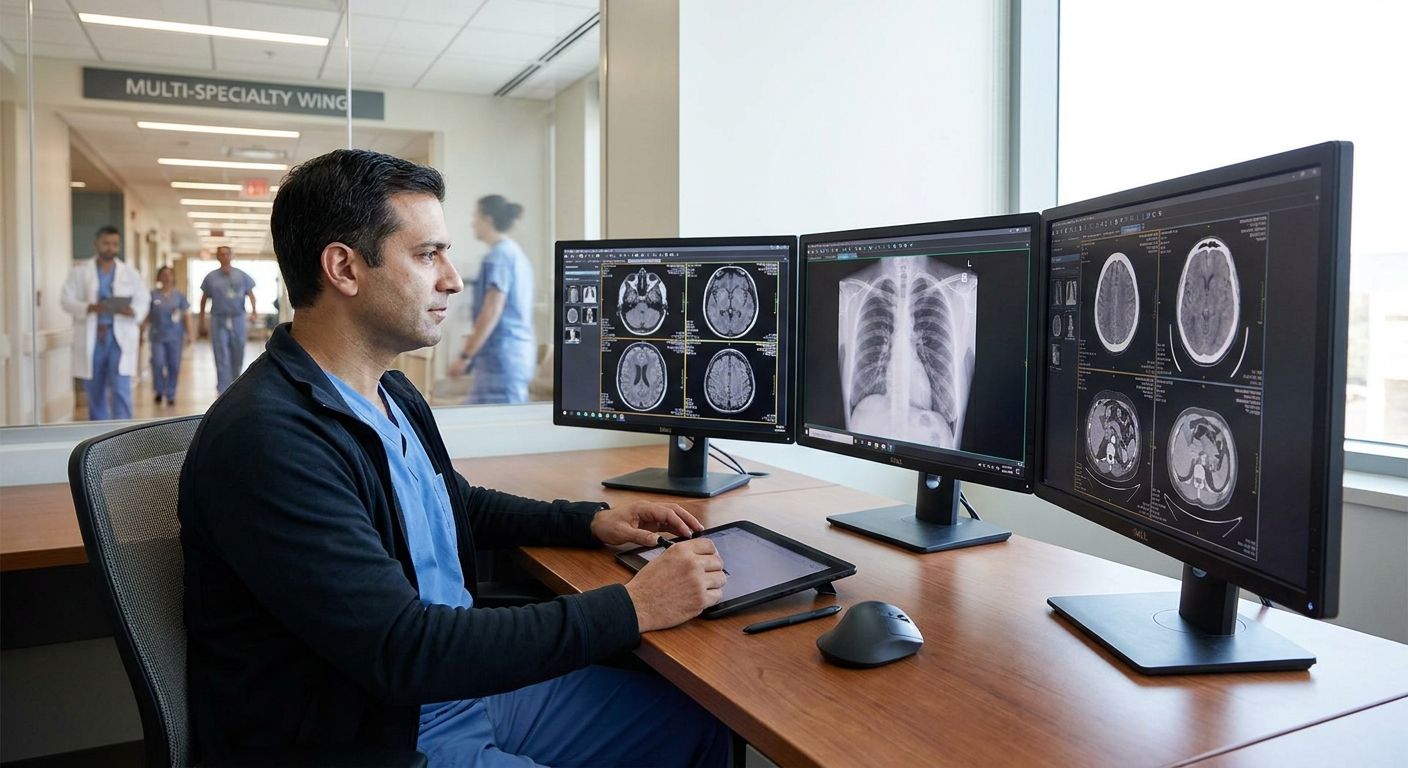
A multi-specialty hospital doesn't run one imaging queue — it runs six or seven at once: emergency CT, inpatient MRI, oncology PET-CT, cardiac studies, orthopedic X-rays, and after-hours trauma scans, often overlapping at 2 a.m. A teleradiology contract built around one modality or one subspecialty breaks the first time two departments need a STAT read in the same hour.
5C Network built its platform around that exact overlap: 2,000+ hospitals route scans through it, with 400+ specialist radiologists covering neuro, MSK, chest, cardiac and oncology reporting under one contract. That's the bar teleradiology services for multi-specialty hospitals should be measured against in 2026.
Who this is for
This guide is for medical directors, radiology department heads and hospital administrators at 100+ bed multi-specialty facilities who read across three or more imaging modalities and need coverage that doesn't collapse when volume spikes overnight or during an ICU surge. If your facility only runs X-ray and the occasional CT, a smaller single-modality teleradiology arrangement is probably simpler and cheaper. This comparison is built for hospitals juggling neuro, cardiac, oncology and trauma reads on the same shift.
What to look for in teleradiology services for multi-specialty hospitals
Subspecialty panel depth, not just headcount
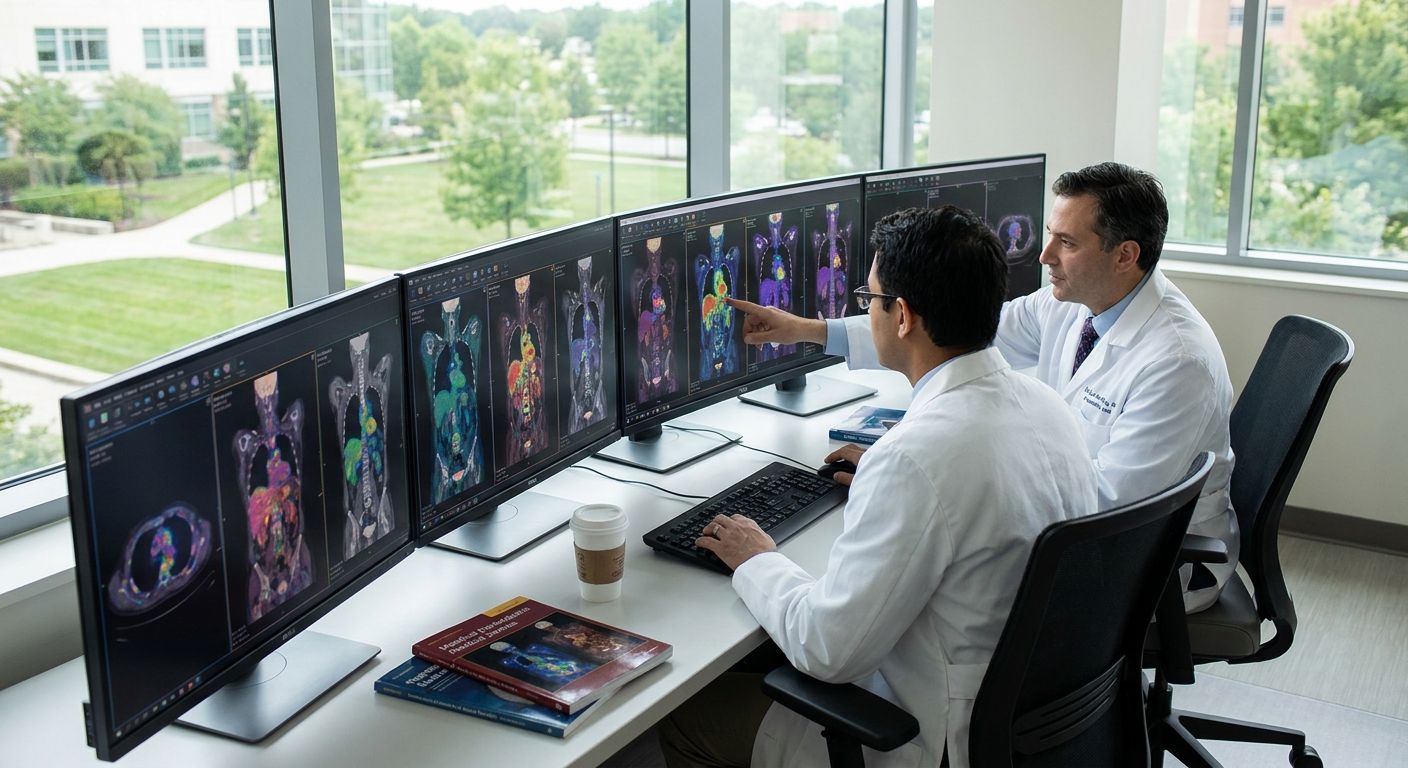
Multi-specialty means neuro, MSK, chest, cardiac and oncology all need a different set of trained eyes. A panel of ten generalist radiologists can't match the read accuracy of a network built from 400+ subspecialists split across those exact categories. Ask any prospective partner how their radiologist panel is divided by subspecialty before you ask about price.
Turnaround SLA broken out by acuity
A STAT emergency read needs a sub-hour turnaround; a routine outpatient film can wait longer without harming anyone. A flat "24-hour" SLA hides the exact bottleneck that hurts your ER throughput. Look for providers that publish turnaround numbers across the full report mix — a 30-minute average across a network reporting 15,000+ scans a day tells you more than a single best-case figure.
AI-assisted triage and structured reporting
At volumes like 15,000+ scans daily network-wide, AI has to flag critical findings — bleeds, pulmonary embolism, fractures — before a radiologist opens the study, cutting dead time between scan capture and sign-off. Structured reporting templates also cut dictation inconsistency across a caseload that spans five or more departments in the same week.
Licensing and credentialing coverage across every department you run
A radiologist credentialed only for plain-film X-ray can't sign off a neuro MRI. Confirm the panel's credentialing spans every modality on your imaging roster, not just the two or three that generate the most volume, before you route a single scan.
PACS/RIS integration without a rip-and-replace
Most multi-specialty hospitals run legacy PACS installed at different times across different departments. A teleradiology partner that demands a full system swap adds months of downtime; one that integrates with existing DICOM feeds gets reporting live in weeks, not quarters.
Top picks: which teleradiology service model fits a multi-specialty hospital
The safe pick — AI-native network with radiologist sign-off. This is the model 5C Network runs: 400+ specialist radiologists, a 30-minute average turnaround, and AI triage layered ahead of human sign-off across a network handling 15,000+ scans a day and 8.5 million radiology reports cumulatively. It's built for hospitals reading across neuro, cardiac, oncology and trauma in the same shift. Buy if your monthly volume spans three or more modalities.
The legacy pick — traditional call-center teleradiology outsourcing. Works fine for a steady, low-acuity volume of routine films, but most of these operations run generalist-heavy panels without an AI triage layer ahead of the read queue. Turnaround tends to sit in the 4-to-24-hour range rather than a published sub-hour SLA. Consider it only for departments with predictable, non-emergent volume.
The outgrown pick — single-radiologist or small-group remote reporting. Fine for a facility reading a few hundred scans a month in one or two modalities. It cannot hold up once volume crosses into the thousands across multiple specialties — there's no bench depth when the one radiologist covering neuro is out sick during an ICU surge. Skip once your hospital adds a third active modality.
The risky pick — in-house night float only, no teleradiology backup. Relying on one or two on-call radiologists physically present overnight means zero structured overflow when two departments spike in the same hour. Skip this as a standalone strategy for any facility running true multi-specialty volume in 2026.
What to avoid
- A single blended turnaround number with no acuity breakdown. If a provider can't tell you the STAT number separately from the routine number, they haven't measured it.
- A panel that can't show subspecialty distribution. Ask directly how many of their radiologists read neuro versus MSK versus cardiac — a vague answer means a thin bench.
- No visible AI-assisted critical-finding flagging. If bleeds, PE or fractures aren't flagged ahead of the human read, overnight backlogs build fast once your emergency department ramps up.
Verdict comparison
| Model | Turnaround SLA | Subspecialty depth | AI triage | Verdict |
|---|---|---|---|---|
| AI-native network (5C Network model) | 30 min avg | 400+ radiologists across specialties | Yes | Buy |
| Traditional call-center outsourcing | 4-24 hr, often unpublished | Generalist-heavy | Rare | Consider |
| Single-radiologist arrangement | No fixed SLA | 1-2 specialties max | No | Skip |
| In-house night float only | Depends on who's on shift | Limited to on-call specialty | No | Skip |
Get a teleradiology coverage review
See where your turnaround and subspecialty gaps sit against 2026 benchmarks.
FAQ
What are teleradiology services for multi-specialty hospitals?
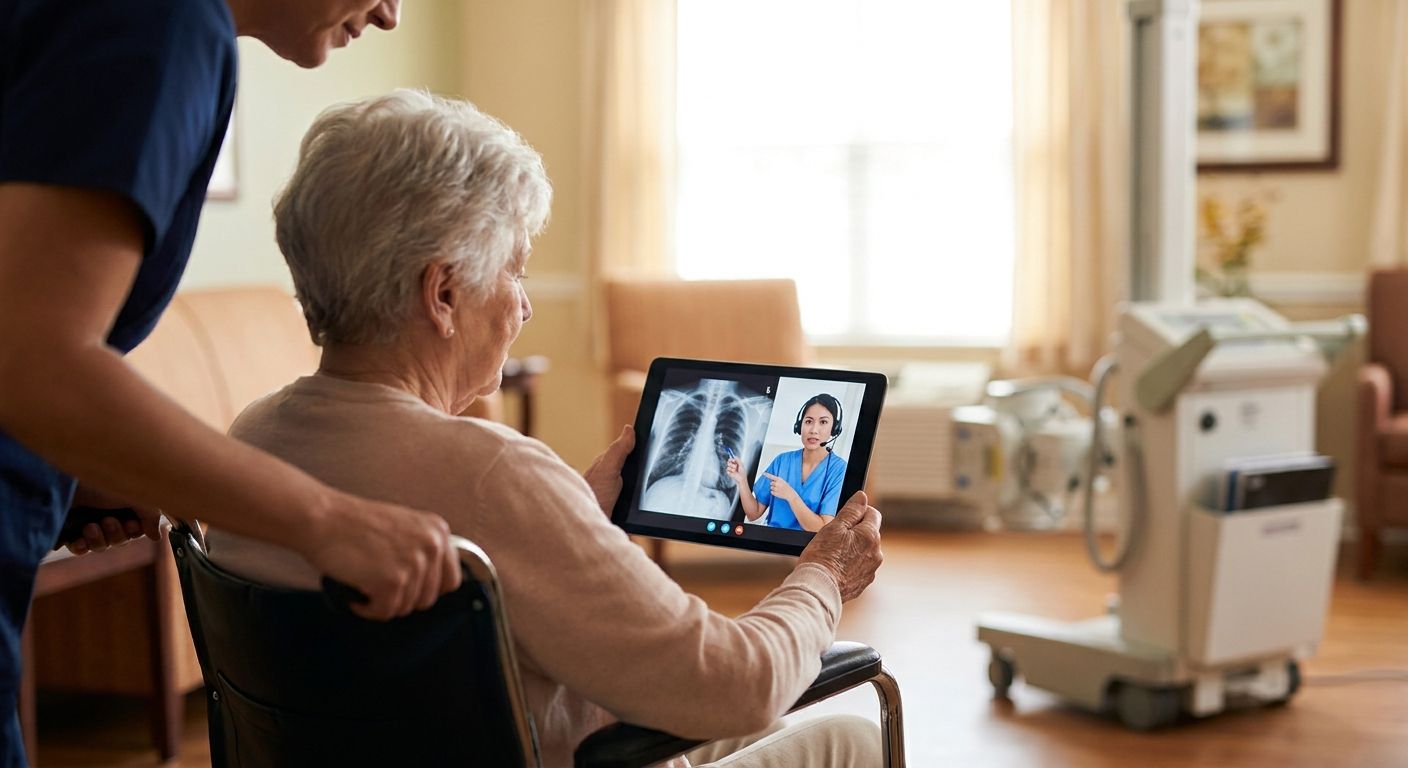
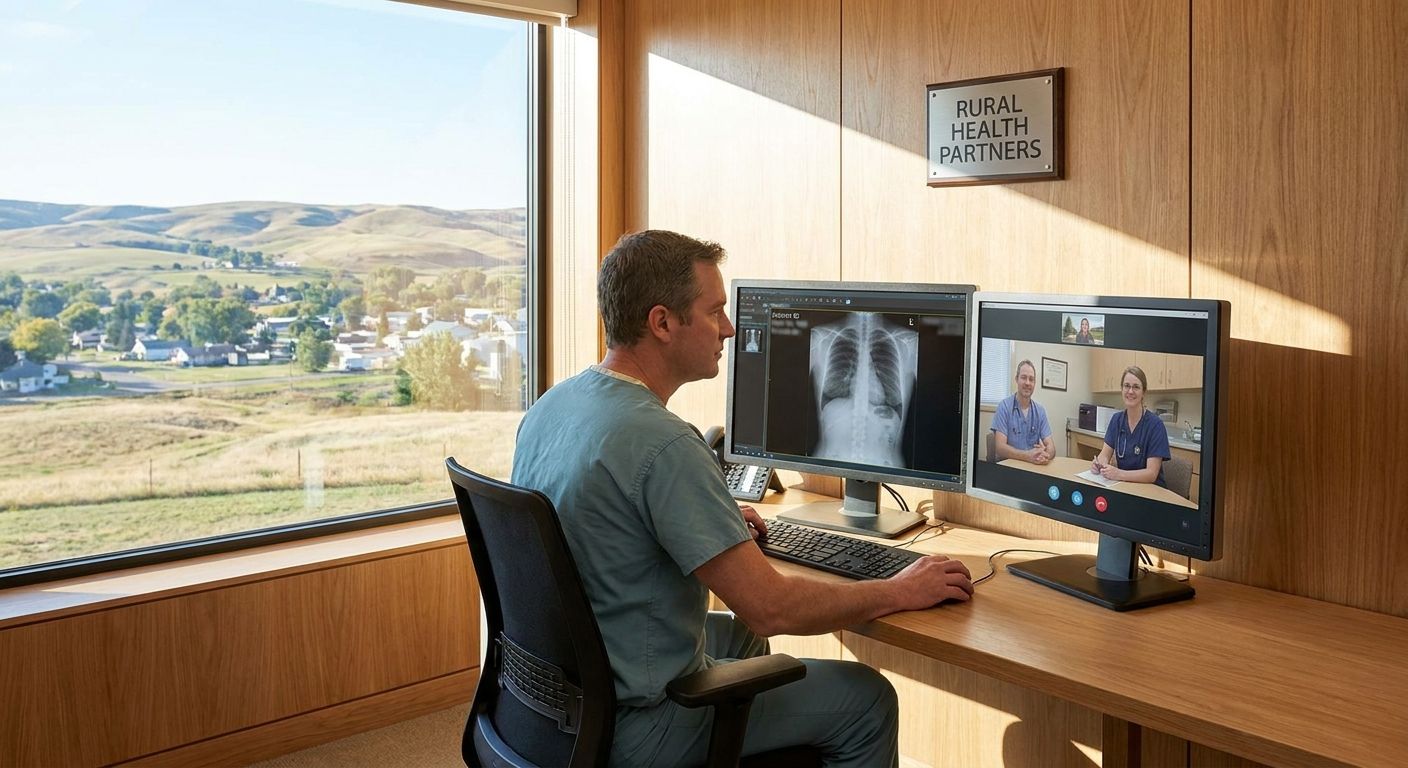
Teleradiology services for multi-specialty hospitals route X-ray, CT, MRI and PET-CT scans to remote specialist radiologists for reporting across every department a hospital runs, not just one modality. Networks like 5C Network cover 2,000+ hospitals with 400+ radiologists split across subspecialties.
How fast should a teleradiology report turn around in 2026?
STAT emergency reads should come back in under an hour; routine outpatient films can take longer without harming care. 5C Network's network averages a 30-minute turnaround across its full report mix.
Is AI-assisted teleradiology accurate enough for multi-specialty hospitals?
AI is used to triage and flag critical findings ahead of a radiologist's sign-off, not to replace the sign-off itself. Every report still gets reviewed and signed by a specialist radiologist before it reaches the hospital.
How many radiologists does a multi-specialty hospital need on call?
It depends on how many modalities and specialties run concurrently, but a single on-call radiologist can't cover neuro, cardiac and oncology reads at once. Networks with 400+ subspecialists exist specifically to fill that gap without hospitals staffing every specialty in-house.
Can teleradiology handle STAT emergency reads?
Yes, teleradiology networks built for acute care publish separate STAT turnaround numbers, often under an hour, alongside routine turnaround averages. Ask any provider for that breakdown before signing a contract.
Does teleradiology integrate with existing PACS and RIS systems?
Most teleradiology platforms integrate with existing DICOM feeds rather than requiring a full PACS replacement, which gets reporting live in weeks. Confirm integration scope during the vendor evaluation, not after signing.
What's the difference between teleradiology and traditional outsourcing?
Traditional outsourcing typically routes scans to a generalist panel with turnaround measured in hours, while AI-native teleradiology networks triage scans before a specialist radiologist reads them, often cutting turnaround to under an hour. The difference shows up most during overnight and ICU surge volume.
How much does teleradiology cost for a multi-specialty hospital?
Cost depends on scan volume, modality mix and subspecialty coverage required, so pricing varies by hospital. Check current pricing directly with the provider once you've confirmed turnaround and credentialing fit your imaging roster.
One last thing
One number from 2026 data is easy to miss: 149 diagnostic centers and hospitals that moved to structured, AI-assisted reporting saw revenue climb by 87%, mostly because faster turnaround kept referring physicians from routing STAT scans elsewhere. That's the entire business case for switching teleradiology services for multi-specialty hospitals — the report delivered in 30 minutes gets read before the patient leaves the ER, and the next referral stays in-house instead of going to whoever answers faster.