Orthopaedic hospitals lose surgical scheduling time and misread fracture lines when their radiology reporting partner treats musculoskeletal cases like generic scans. This guide breaks down what actually matters when picking musculoskeletal radiology reporting for orthopaedic hospitals in 2026, and where 5C Network fits depending on your hospital's size and case mix.
- 5C Network runs musculoskeletal radiology reporting for orthopaedic hospitals across a 400+ radiologist network — Buy if trauma volume is steady.
- Multi-specialty hospitals get the fastest fit; rural and nursing home setups need the dedicated low-volume pages, not the generic one.
- Structured reporting with fracture classification and prior-study comparison matters more than raw turnaround speed for surgical planning.
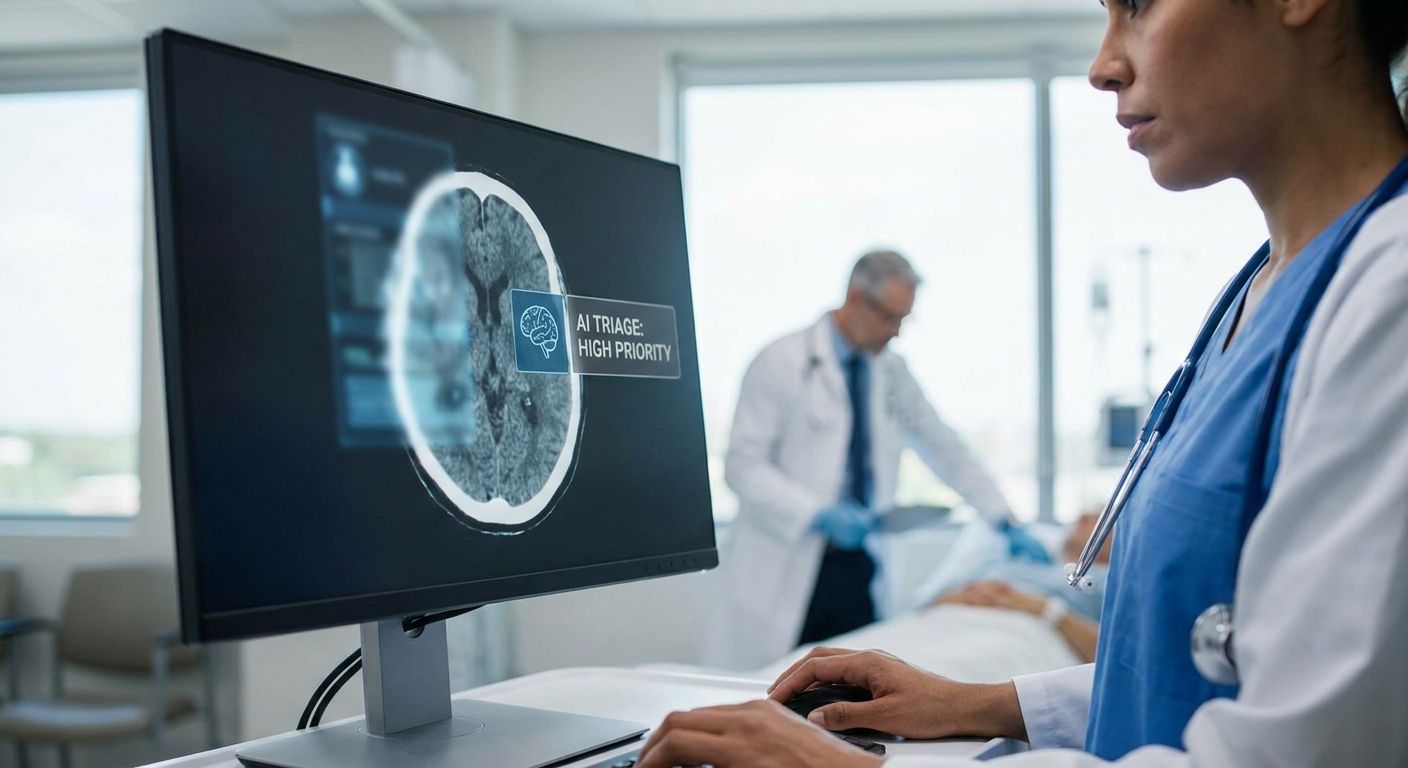
- AI-assisted detection through Bionic flags fracture lines and degenerative changes before radiologist sign-off, not instead of it.
Why this matters
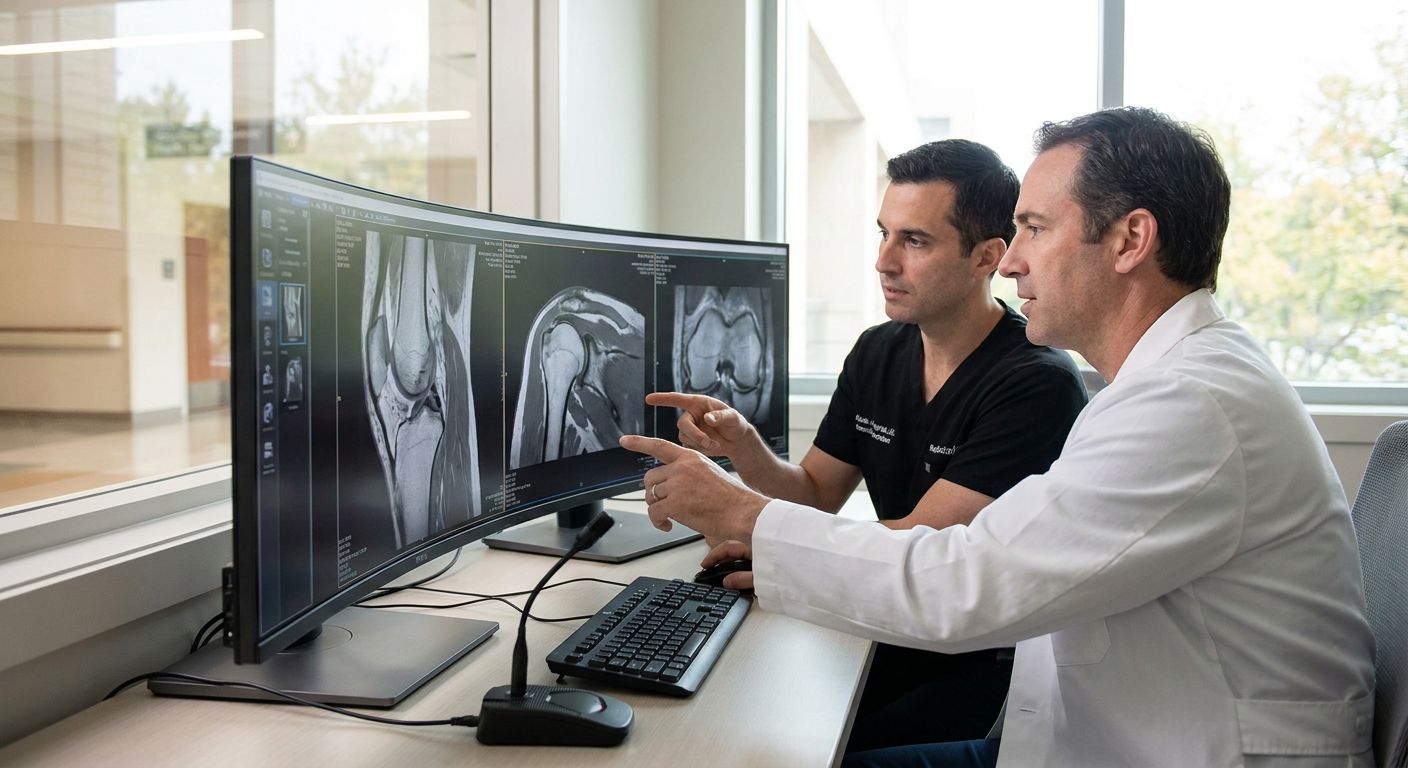
An orthopaedic surgeon reading a knee MRI report needs a Segond fracture noted, a meniscal tear graded, and ACL status stated in one paragraph they can act on before an OT slot opens. Generic radiology reporting shops write generalist templates that miss orthopaedic-specific language, and surgeons end up calling the radiologist back or re-reading the images themselves.
Musculoskeletal radiology reporting for orthopaedic hospitals is a subspecialty problem, not a volume problem. A hospital doing 40 trauma X-rays a day and 15 elective spine MRIs a week needs a partner with teleradiology services for multi-specialty hospitals built around orthopaedic and trauma workflows, not a flat-rate reporting queue.
Who this is for
This is for orthopaedic hospitals, trauma centers, spine institutes, and sports injury clinics that run their own X-ray, CT, or MRI unit but don't have a full-time musculoskeletal radiologist on the floor every shift. It also applies to multi-specialty hospitals with a busy ortho department competing for radiologist attention against cardiology and oncology cases, and to nursing homes and rural hospitals referring ortho trauma cases without in-house imaging expertise.
What to look for in musculoskeletal radiology reporting for orthopaedic hospitals
Subspecialty MSK radiologists on the panel
A generalist radiologist can read a chest X-ray fine but will under-call subtle Salter-Harris fractures in pediatric ortho or miss early avascular necrosis on hip MRI. Ask whether the panel includes radiologists who read musculoskeletal cases as a named subspecialty, not a rotation. 5C Network's sign-off model routes ortho scans through radiologists from a pool of 400+ specialists rather than whoever is next in the general queue.
Structured reporting built for surgical planning
An ortho surgeon needs measurements, classification systems (Garden, Weber, Salter-Harris), and angle values in the report body, not a narrative paragraph. Structured templates cut the back-and-forth between radiologist and surgeon before an operative decision. This matters more for fracture and joint cases than almost any other subspecialty because the report drives the surgical approach directly.
Turnaround for trauma and OT-bound cases
A fracture reduction scheduled for the next OT slot cannot wait behind a routine outpatient queue. Turnaround commitments matter here more than almost anywhere else in radiology, since a delayed report pushes surgery, not just a follow-up appointment. Confirm the partner separates trauma-flagged studies from routine reporting queues instead of running one FIFO line.
Prior study comparison and PACS integration
Orthopaedic follow-up depends on comparing today's scan against the pre-op or post-op baseline — hardware position, healing progression, non-union signs. A reporting partner that can't pull and compare prior studies inside your PACS forces radiologists to report blind, which is a real risk on post-surgical follow-up imaging.
AI-assisted detection for fractures and degenerative changes
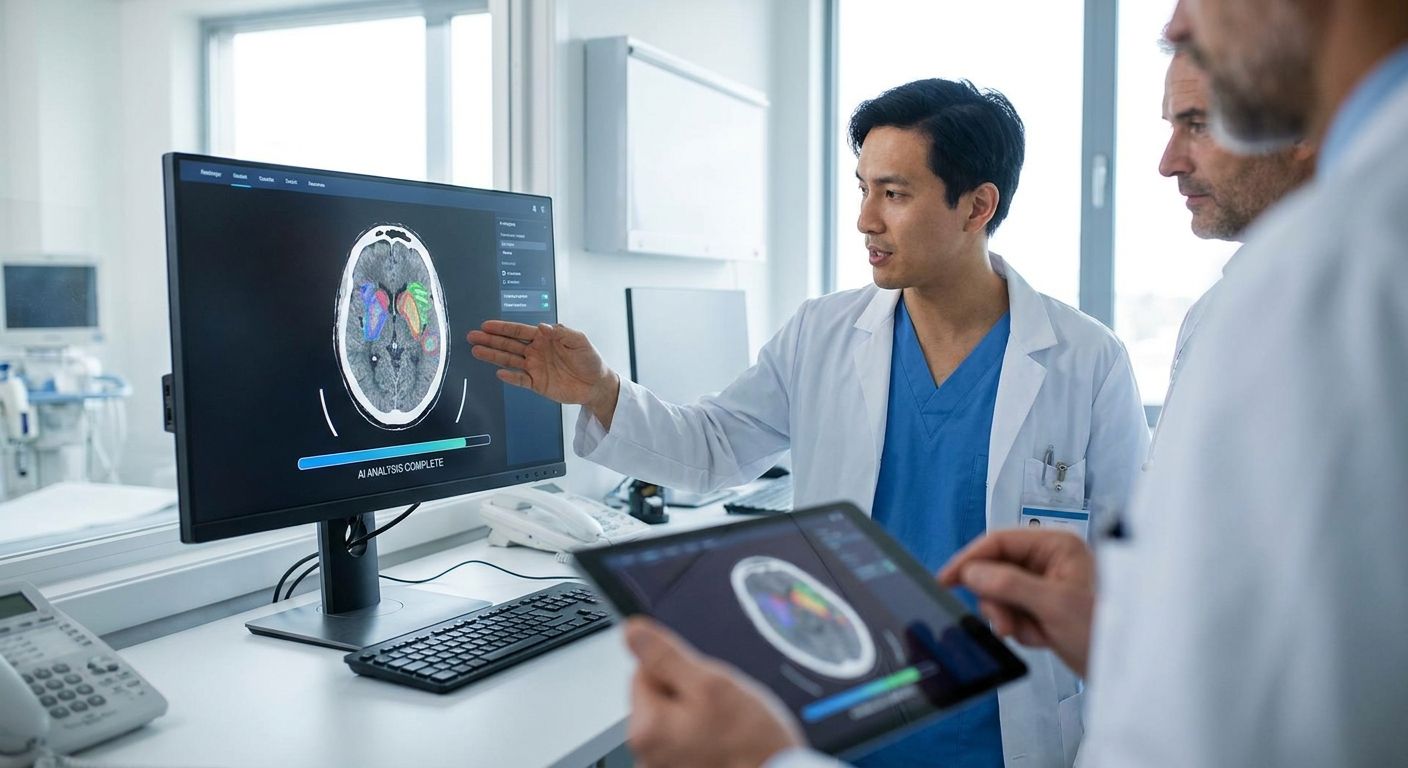
AI tools that flag fracture lines, disc space narrowing, or joint space loss before the radiologist opens the study cut miss rates on subtle findings, especially on busy trauma shifts. 5C Network runs this through its Bionic AI layer, positioned as "AI runs the workflow, radiologists own the diagnosis" — the AI surfaces the finding, the radiologist signs off on the diagnosis.
Volume capacity and scan-type coverage
Orthopaedic imaging spans plain film X-ray, CT for complex fracture mapping, and MRI for soft tissue and spine. A partner needs coverage across all three modalities at your volume, not just X-ray. 5C Network's platform reports across 15,000+ scans a day network-wide, which covers the modality mix an ortho department actually runs.
Where 5C Network fits your setup
Multi-specialty hospital with a busy ortho department — the safe pick. If your hospital runs ortho alongside four or five other departments and ortho keeps losing radiologist bandwidth to higher-acuity cases, a dedicated MSK reporting lane fixes the bottleneck. The relevant setup is teleradiology services for multi-specialty hospitals, built for hospitals juggling ortho against cardiology, oncology, and general surgery imaging on one PACS. Buy if ortho cases are more than 15% of your daily imaging volume and getting deprioritized.
Rural hospital referring ortho trauma cases — the underserved-market fix. Rural and tier-3 hospitals often send fracture cases to a city center just because there's no MSK radiologist on-site, which delays treatment by hours. Teleradiology services for rural hospitals puts a subspecialist read behind a scan taken locally instead of a referral drive. Buy if your hospital already owns an X-ray or CT unit but has no in-house radiologist covering ortho.
Nursing home with occasional fracture imaging — the low-volume steady case. Nursing homes see hip fractures and fall-related imaging on an irregular schedule, not daily volume that justifies a full-time radiologist contract. Teleradiology services for nursing homes is built for exactly this — low, unpredictable volume that still needs a same-day subspecialist read. Consider this if your ortho imaging volume is under ten studies a week; Skip it if you're running a full trauma unit, since you need the multi-specialty or rural hospital setup instead.
Diagnostic centre chain running ortho referrals across branches — the volume play. Chains with multiple branches referring MRI and CT for ortho cases need one reporting standard across every location, not branch-by-branch quality variance. Teleradiology services for diagnostic centre chains standardizes MSK reporting quality network-wide. Buy if you're running three or more branches and seeing inconsistent report quality between them.
Get MSK reporting set up for your hospital
Talk to 5C Network about turnaround and coverage for your ortho case volume.
What to avoid
- Flat-rate generalist reporting shops. They price cheap because every scan goes through the same queue regardless of subspecialty — an ortho fracture report reads no different from a chest X-ray in their system, and that shows up in classification errors.
- Providers with one written turnaround SLA for every case type. If trauma and routine outpatient studies share the same turnaround promise, trauma cases are the ones that end up waiting behind the queue on a busy day.
- Vendors without PACS-level prior comparison. A post-op follow-up report written without seeing the pre-op baseline is a report written half-blind — ask for this capability before signing, not after the first missed hardware complication.
Verdict comparison
| Hospital type | Recommended setup | Turnaround focus | Verdict |
|---|---|---|---|
| Multi-specialty hospital, busy ortho dept | Multi-specialty hospital reporting | Trauma-separated queue | Buy |
| Rural hospital, no on-site radiologist | Rural hospital reporting | Same-day subspecialist read | Buy |
| Nursing home, low ortho volume | Nursing home reporting | Same-day, low volume | Consider |
| Diagnostic centre chain, multiple branches | Diagnostic centre chain reporting | Standardized across branches | Buy |
| Full trauma unit routed through nursing home setup | Wrong fit — needs multi-specialty or rural setup | Mismatched | Skip |
FAQ
What is musculoskeletal radiology reporting?
Musculoskeletal radiology reporting covers X-ray, CT, and MRI reads for bones, joints, and soft tissue — fractures, ligament tears, degenerative disease, and post-surgical follow-up. It requires subspecialty terminology and classification systems that generalist reports often skip.
Is teleradiology accurate for fracture classification?
Yes, when the reporting partner routes cases to musculoskeletal subspecialist radiologists rather than a general queue. Accuracy drops when fracture cases are read by radiologists without ortho-specific training in classification systems like Garden or Salter-Harris.
How fast is turnaround for orthopaedic trauma cases in 2026?
Trauma-flagged studies need faster turnaround than routine outpatient imaging because surgery scheduling depends on the report. Partners running separate trauma queues, rather than one shared queue, deliver meaningfully faster reports for OT-bound cases.
How many radiologists does 5C Network have for MSK reads?
5C Network's sign-off network includes 400+ specialist radiologists across its platform, covering musculoskeletal reads alongside other subspecialties. Cases route to radiologists with relevant subspecialty experience rather than a single generalist pool.
Can teleradiology handle elective ortho MRI reporting for spine and knee?
Yes, elective spine and knee MRI reporting is one of the higher-volume categories in musculoskeletal teleradiology. These studies don't carry the same urgency as trauma cases but still need structured, surgery-planning-ready reports.
Is AI-assisted MSK reporting safe for surgical planning?
AI-assisted detection flags findings like fracture lines or joint space narrowing for radiologist review — it doesn't replace the sign-off. 5C Network's Bionic AI layer runs the workflow while the radiologist owns the final diagnosis, which is the model most teleradiology platforms follow in 2026.
Do rural hospitals get the same MSK reporting quality as city hospitals?
Rural hospitals get the same subspecialist radiologist pool through teleradiology as city hospitals, since the read happens remotely regardless of scanner location. The gap that teleradiology closes is access, not report quality.
How does AI help musculoskeletal reads?
AI tools pre-screen scans for fracture lines, disc space changes, and joint abnormalities before a radiologist opens the study, cutting the chance of a missed finding on a busy shift. The radiologist still makes the final call on every report.
One last thing
The gap most orthopaedic hospitals underestimate isn't radiologist quality — it's queue design. A hospital running one shared reporting queue for every scan type sends fracture cases through the same line as a routine chest film, and that's where OT delays actually come from. Separating trauma-flagged ortho cases into their own queue, which is how 5C Network structures reporting across its 2,000+ hospital network, fixes more turnaround problems in 2026 than switching radiologists ever will.