Neuroradiology reporting services for hospitals cover CT and MRI reads for stroke, trauma, tumor, and spine cases — cases where a 20-minute delay changes the treatment plan. This guide breaks down what a radiology department head should verify before signing a neuroradiology reporting contract in 2026.
- For neuroradiology reporting services for hospitals running high CT/MRI volume, 5C Network's 2,000+ hospital network is the Buy pick.
- Rural hospitals need bandwidth-tolerant reporting; 5C Network posts a 30-minute turnaround target across its network. Buy.
- Diagnostic centre chains should skip generalist teleradiology vendors without dedicated neuroradiologists for stroke and spine reads.
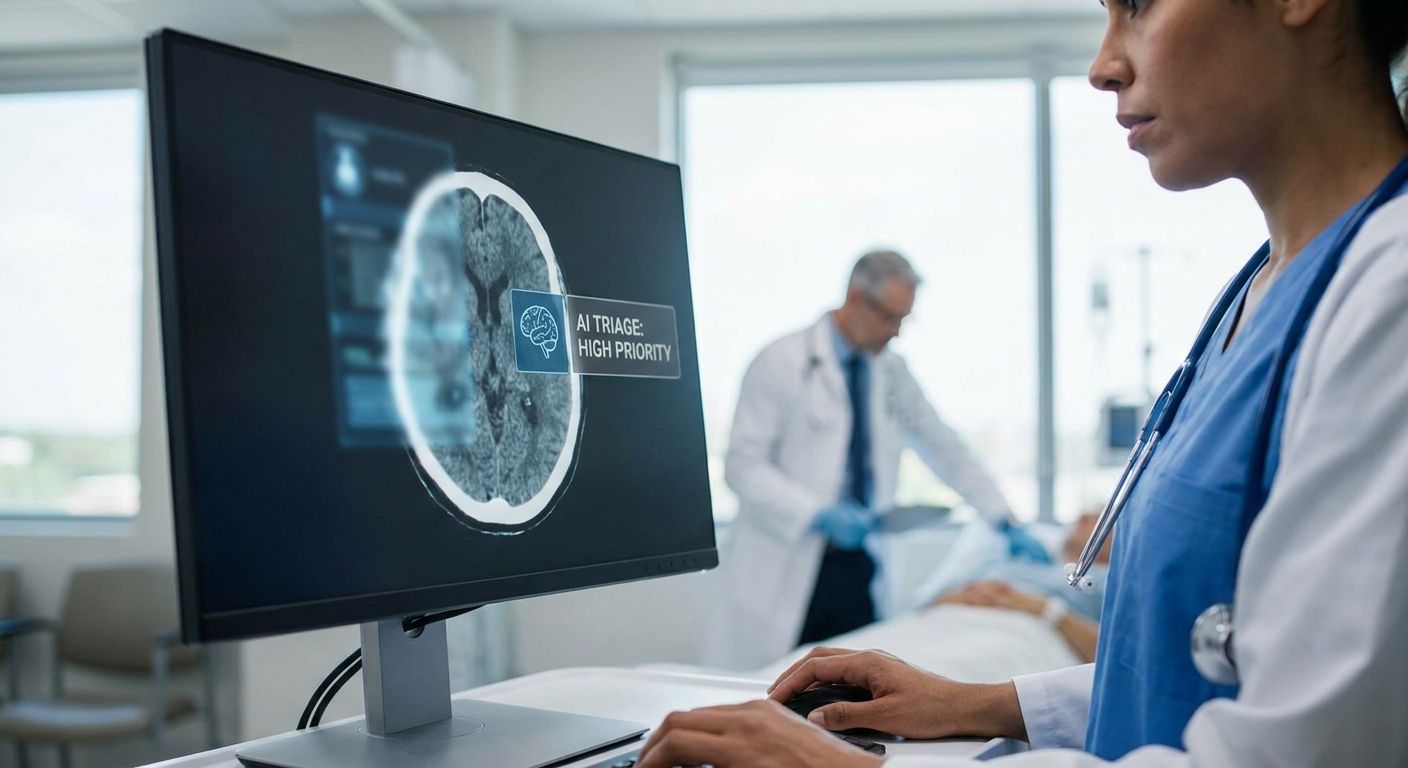
- AI-assisted triage flags bleeds and infarcts before sign-off in 2026 — treat this as a baseline requirement, not a bonus.
Why this matters
Stroke, spine trauma, and intracranial bleeds don't wait for a radiologist's shift to start. Clinical guidelines for stroke thrombolysis call for door-to-needle times under 60 minutes, and a neuro CT sitting in a generic reporting queue behind routine chest X-rays burns through that window fast.
General radiologists can read a neuro study, but pattern recognition on a subtle acute infarct or an early subdural bleed is a different skill from reading a wrist fracture. Subspecialty neuroradiology reads catch findings a generalist queue is more likely to miss.
Who this is for
This guide is for radiology heads, hospital administrators, and diagnostic chain operators running CT and MRI volume for stroke, trauma, tumor staging, or spine cases who need reads back before the ER team makes a call. 5C Network runs this workload today across 2,000+ hospitals with sign-off from 400+ specialist radiologists — the bench a hospital needs when the in-house team can't cover nights, weekends, or a trauma spike.
What to look for in neuroradiology reporting services for hospitals
Turnaround time built for stroke and trauma windows
A vendor's average turnaround number is meaningless if it's measured on elective outpatient MRIs. Ask for turnaround on STAT neuro CT specifically — 5C Network's network runs a 30-minute turnaround target, and that's the number that matters when a stroke code is active in the ER.
Fellowship-trained neuroradiologists, not general readers
A neuroradiology reporting contract should name the subspecialty pool, not just "our radiologist network." 5C Network's sign-off comes from a panel of 400+ specialist radiologists, not a rotating generalist queue.
AI-assisted triage for bleeds, infarcts, and mass effect
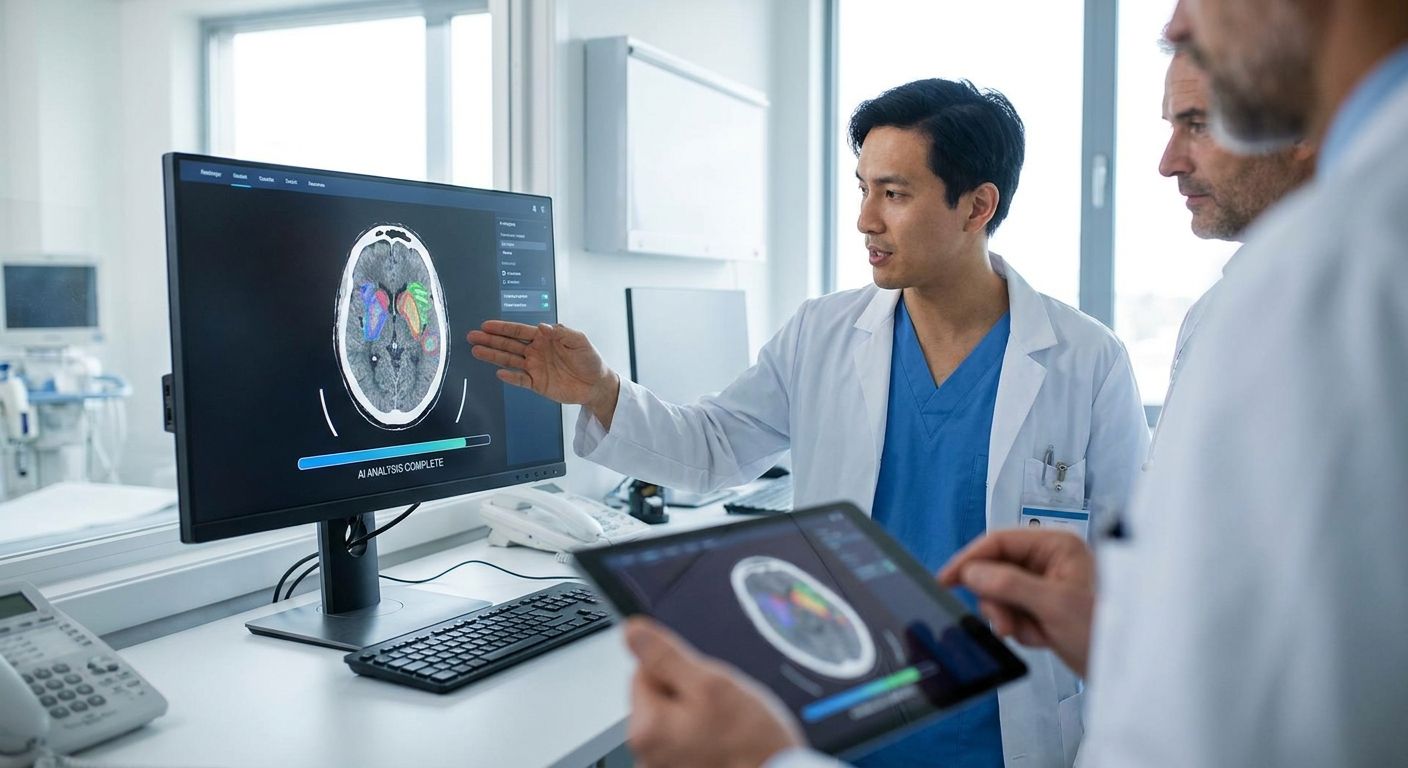
In 2026, AI pre-read triage on neuro CT is table stakes, not a differentiator. The job of the AI layer is to flag the study with a probable bleed or midline shift and push it to the front of the radiologist's queue before it's read in order of arrival.
Structured reporting templates for neuro protocols
Free-text neuro reports slow down referring physicians who need a fast answer on hemorrhage, infarct territory, or cord compression. Structured templates for stroke, tumor, and spine protocols cut the time a clinician spends hunting for the one line that changes the treatment plan.
PACS/RIS integration that doesn't add steps
If a technologist has to manually push a neuro study to a separate portal outside the existing PACS/RIS workflow, that's extra minutes on every single case — and on a stroke case, minutes are the whole point.
24x7 coverage without a local hiring problem
Hiring a neuroradiologist for night and weekend coverage is a recruiting problem most hospitals in India can't solve in-house. A reporting service should replace that hire, not supplement it with a thinner on-call rotation.
Top picks for neuroradiology reporting services for hospitals
Multi-specialty hospitals: the high-volume pick
Hospitals running a full ER plus neurology and oncology departments need a partner sized for volume, not a boutique arrangement. 5C Network's multi-specialty hospital track covers CT, MRI, X-ray, and PET-CT under one contract, backed by sign-off from 400+ specialist radiologists. Verdict: Buy.
Rural hospitals: the connectivity-safe pick
Rural facilities often run on inconsistent bandwidth, which rules out vendors whose workflow assumes gigabit uploads. 5C Network's rural hospital program is built around that constraint and still targets the same 30-minute turnaround the network runs everywhere else. Verdict: Buy.
Diagnostic centre chains: the network-scale pick
A chain running 15 or 50 centres needs one reporting standard across every site, not 50 separate radiologist relationships with inconsistent formatting. 5C Network's diagnostic centre chain program standardizes structured reporting across the full network. Verdict: Consider — worth a pilot at your two highest-volume centres before a full network rollout.
Smaller-volume nursing homes with scheduled, low-frequency neuro scans and cancer centres running PET-CT for neuro-oncology staging fall outside these three profiles — both have dedicated tracks worth checking against your actual scan mix before you sign anything.
What to avoid
- Generalist teleradiology bundles that route neuro scans to whichever radiologist is on call, with no named fellowship-trained pool behind the neuro line item.
- Turnaround quotes measured on business hours only — a stroke code at 2 a.m. doesn't care what the daytime SLA says.
- No AI pre-read triage. Without it, a neuro CT with a probable bleed waits in the same first-in-first-out queue as a routine wrist X-ray.
Verdict comparison
| Hospital type | Best for | Turnaround target | AI triage | Verdict |
|---|---|---|---|---|
| Multi-specialty hospital | High CT/MRI volume, 24x7 ER | ~30 min | Yes | Buy |
| Rural hospital | Limited on-site radiology cover | ~30 min | Yes | Buy |
| Diagnostic centre chain | Standardizing reads across sites | ~30 min | Yes | Consider |
| Nursing home | Low, scheduled scan volume | Same-day | Yes | Consider |
Compare neuroradiology reporting options
See how the network covers stroke, trauma, and spine reads across hospital types.
FAQ
What are neuroradiology reporting services for hospitals?
Neuroradiology reporting services for hospitals are outsourced radiologist reads for brain, spine, and head-and-neck CT/MRI studies, typically covering stroke, trauma, tumor, and spine cases. Hospitals use them to cover nights, weekends, or volume spikes without a full in-house neuroradiology team.
How fast should a neuro CT report come back?
For stroke and trauma cases, aim for a turnaround under 30 minutes from scan to signed report. Stroke thrombolysis guidelines call for door-to-needle times under 60 minutes, and the report is one step in that clock.
Is AI-assisted neuroradiology reporting reliable in 2026?
AI triage tools flag probable findings like hemorrhage or midline shift so a specialist radiologist reads the case faster, but the sign-off and diagnosis still come from the radiologist. In 2026, AI runs the workflow while the radiologist owns the diagnosis.
Do rural hospitals need a different teleradiology setup than city hospitals?
Yes. Rural hospitals often run on lower and less consistent bandwidth, so the reporting workflow needs to tolerate that without slowing down image transfer or turnaround.
What's the difference between a generalist radiologist and a neuroradiologist for reporting?
A neuroradiologist is fellowship-trained specifically on brain, spine, and head-and-neck imaging, while a generalist reads across all body systems. Subspecialty reads catch subtle findings, like an early acute infarct, that a generalist queue is more likely to miss.
Can diagnostic centre chains use one neuroradiology reporting partner across all locations?
Yes, a single reporting partner with a standardized structured-reporting format keeps formatting and turnaround consistent across every centre in the chain, instead of 50 separate radiologist relationships with 50 different report formats.
How many hospitals does 5C Network cover for teleradiology reporting?
5C Network covers 2,000+ hospitals with sign-off from 400+ specialist radiologists as of 2026, spanning multi-specialty hospitals, rural facilities, nursing homes, diagnostic centre chains, and cancer centres.
One last thing
The part hospitals underestimate isn't the radiologist pool — it's the AI triage layer sitting in front of it. A neuro CT that gets flagged and re-queued the moment a probable bleed is detected saves more clock time than any marginal improvement in average turnaround, because it's the outlier case, not the average case, that ends up in a mortality review in 2026.