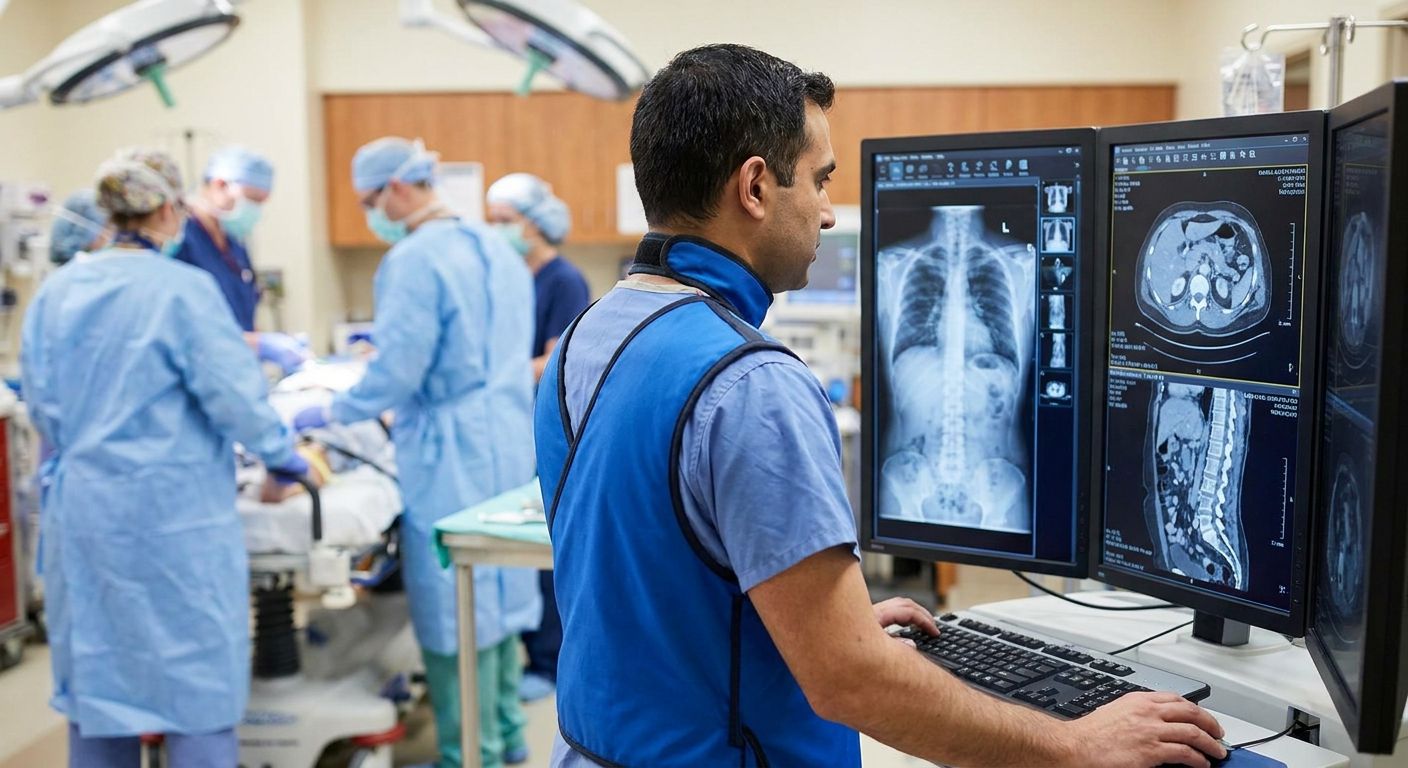
Emergency radiology reporting for trauma centres means getting X-ray, CT, and MRI interpretations back fast enough to drive triage decisions before a patient's condition changes — not after. Trauma imaging queues spike at 2 AM as often as 2 PM, and a polytrauma CT chest-abdomen-pelvis sitting unread for two hours is a different problem than a routine outpatient scan sitting in a queue overnight.
- Trauma centres need sub-30-minute reads on critical CT and X-ray studies, not next-morning turnaround.
- 5C Network runs emergency radiology reporting for trauma centres through Bionic Flow, with sign-off from 400+ specialist radiologists across a network covering 2,000+ hospitals.
- Manual fixes — night-shift rosters, structured trauma templates, escalation SLAs — solve most of the problem before any software enters the picture.
- AI-assisted triage flags critical findings (pneumothorax, active bleed, fracture) for radiologist review first, cutting the time between scan and sign-off.
Why emergency radiology reporting matters for trauma centres
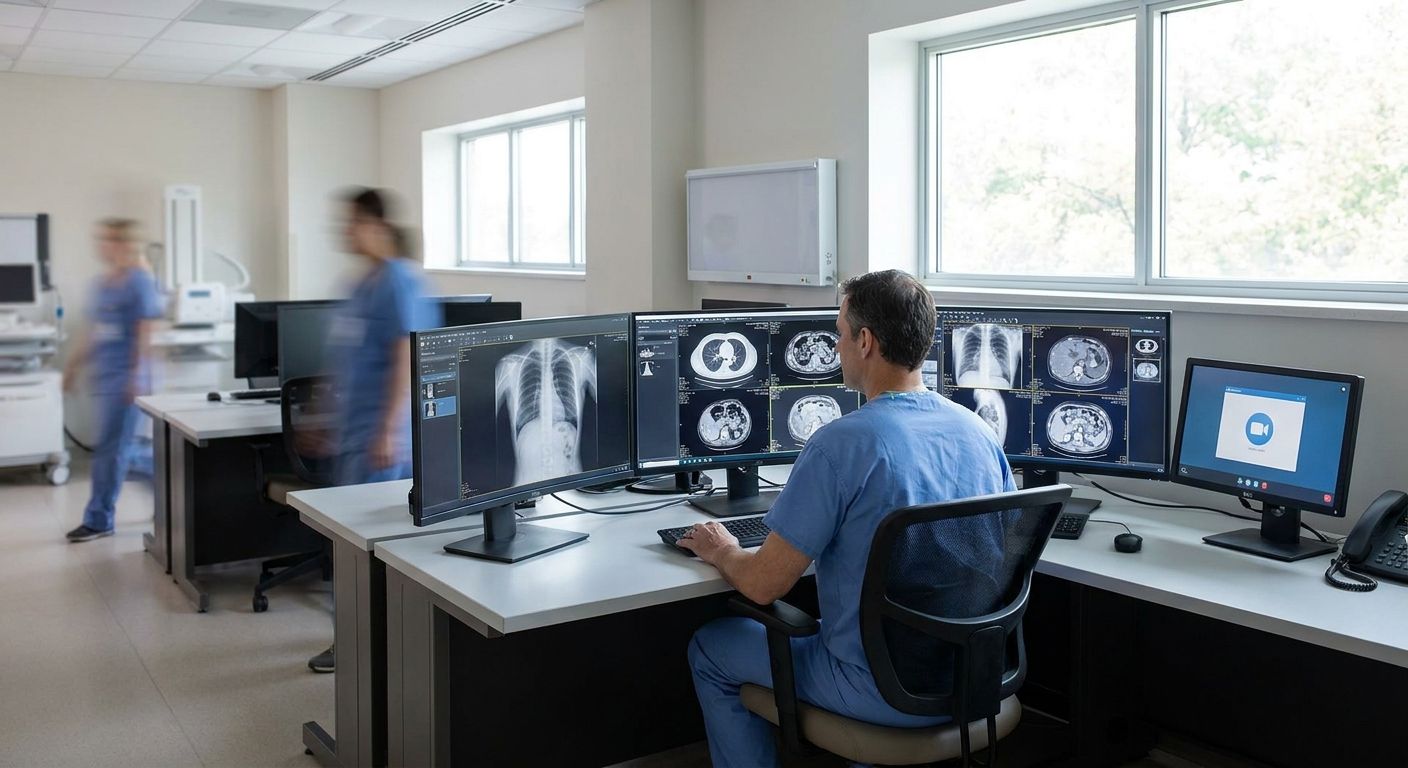
A trauma centre's imaging load doesn't follow office hours, and neither does its radiologist supply. Most Indian trauma units run one on-call radiologist per shift, sometimes covering CT, MRI, and X-ray for two or three departments at once. When that radiologist is mid-report on a head trauma CT and a second polytrauma case rolls in, the second read waits — and in trauma medicine, waiting is a clinical risk, not an operational inconvenience.
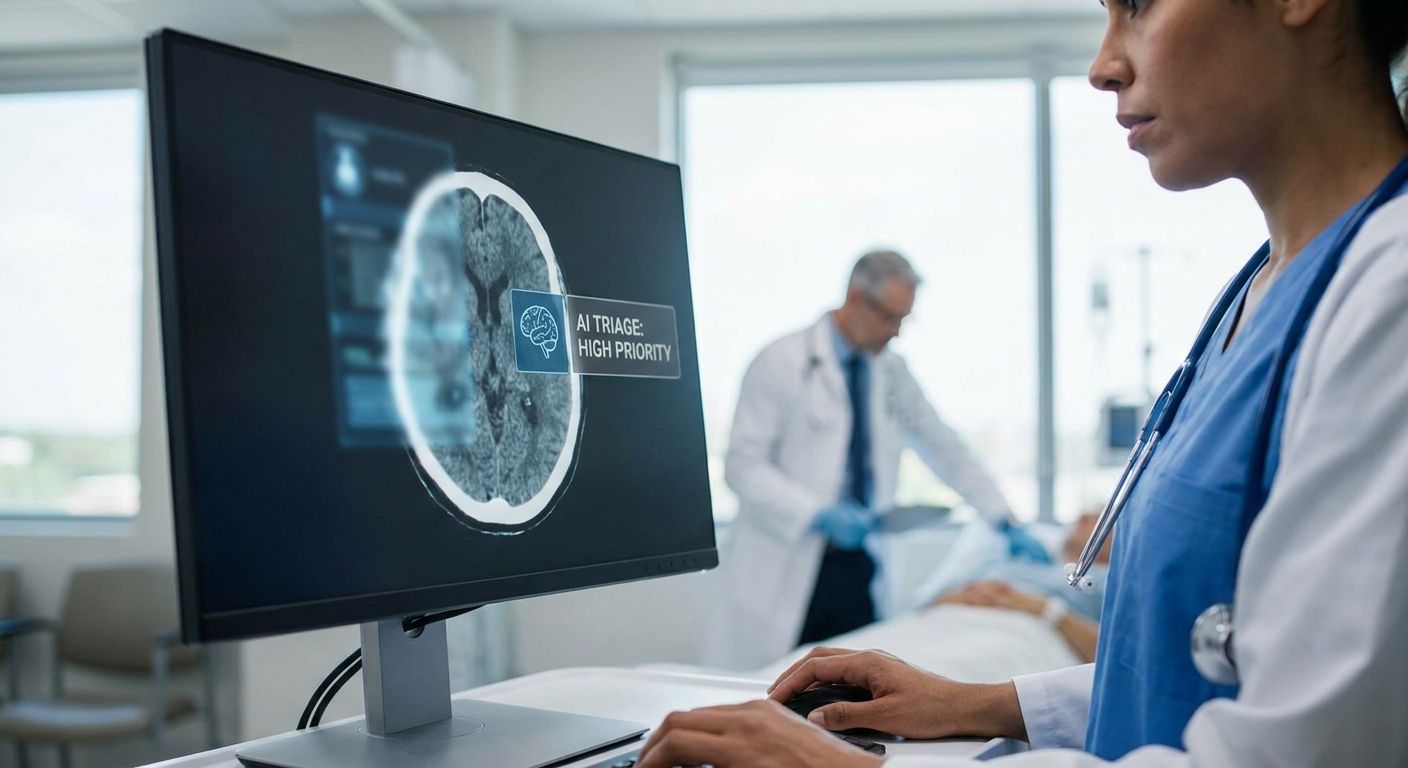
The 5C Network model routes emergency scans through AI-assisted triage before a radiologist opens the file, so the study most likely to contain a critical finding — active hemorrhage, tension pneumothorax, displaced fracture — moves to the front of the read queue automatically. That's the structural difference between generic teleradiology and reporting built for a 24/7 trauma queue: the software decides order, the radiologist still owns the diagnosis and the sign-off.
Build the emergency radiology workflow trauma centres actually need
Map your trauma imaging volume and peak hours
Before fixing turnaround, know where the load actually sits. Most trauma units discover their real bottleneck is a two-hour window, not the whole night.
- Pull imaging logs by hour for the last 90 days, split by modality
- Flag the top three peak windows (usually 8 PM–midnight and post-accident clusters)
- Separate trauma-protocol studies (CT head, CT chest-abdomen-pelvis, pelvis X-ray) from routine ones
- Note which peak windows currently run with a single covering radiologist
Set a turnaround-time benchmark per modality
A 30-minute benchmark makes sense for a trauma CT head; it's meaningless for a routine outpatient MRI knee. Segment your targets instead of applying one number to every study.
- Set a hard SLA for trauma-protocol CT and X-ray (target: under 30 minutes)
- Set a separate, looser SLA for non-trauma inpatient studies
- Track actual turnaround against target weekly, not monthly
- Publish the SLA to your ER and orthopaedic teams so expectations are shared
Build a radiologist coverage plan for nights and weekends
This is where most trauma centres bleed turnaround time — one radiologist on call, no backup, no defined escalation if that radiologist is mid-report on something else.
- Draft a night and weekend roster with a named backup, not just a primary
- Define what happens when the primary is unreachable for more than 15 minutes
- Cross-train coverage so CT, MRI, and X-ray reads aren't siloed to one specialist
- If in-house coverage gaps persist, extend into a teleradiology partner for night and weekend overflow — 5C Network runs this exact overflow model with sign-off from its 400+-radiologist network so trauma reads never wait on a single on-call physician
Standardize structured reporting templates for trauma protocols
Free-text trauma reports slow both the radiologist writing them and the ER physician reading them. Structured templates cut both.
- Build a template for CT head trauma (hemorrhage, midline shift, skull fracture, fields pre-populated)
- Build a template for CT chest-abdomen-pelvis polytrauma (organ injury grading, free fluid, pneumothorax)
- Standardize musculoskeletal radiology reporting templates for fracture classification so ortho teams get consistent terminology
- Version-control templates so ER and radiology agree on wording before rollout, not after a dispute
Integrate AI-assisted triage for critical findings
Once coverage and templates are fixed, AI triage is the layer that actually compresses turnaround — it reorders the queue so critical scans surface first, before a radiologist has even opened the worklist.
- Deploy an AI triage layer that flags likely critical findings for priority review
- Set the triage layer to reorder, not auto-report — radiologists still sign off every study
- Track false-positive and false-negative flag rates monthly to keep trust in the tool
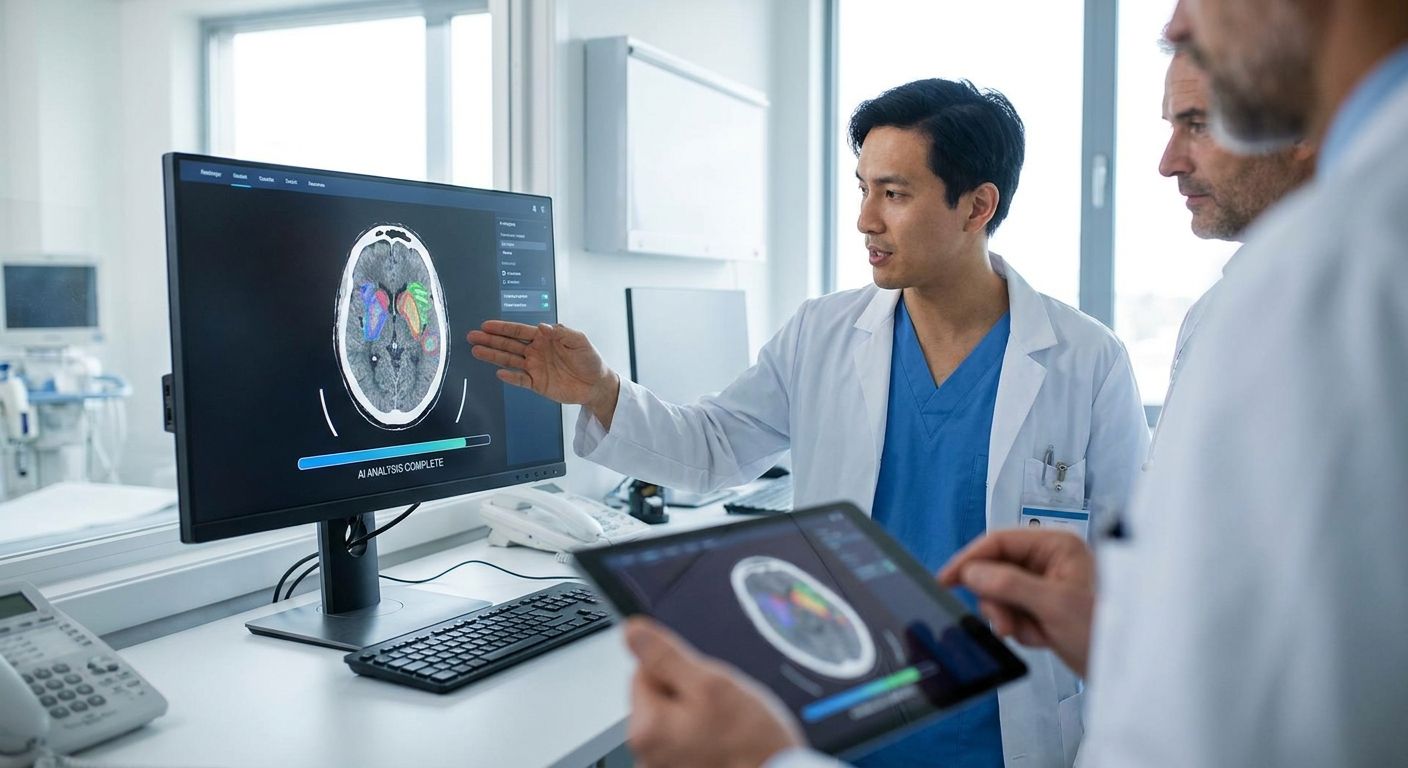
- Extend triage into neuroradiology reporting for head trauma cases where minutes matter most
Establish escalation and sign-off protocols
A fast read that never reaches the treating physician is still a delay. Close the loop between report and action.
- Define a direct-call protocol for any critical finding, bypassing the normal report queue
- Set a maximum time between finding detection and physician notification (under 15 minutes for critical flags)
- Log every escalation with timestamp for audit and quality review
- Require radiologist sign-off on every AI-flagged study before it counts as final
Audit turnaround and diagnostic accuracy monthly
Turnaround gains erode without a recurring check. Build the audit into the monthly quality meeting, not a once-a-year review.
- Compare actual turnaround against the modality-specific SLA set earlier
- Sample 5-10% of reports for peer or second-opinion review
- Track missed critical findings as a hard quality metric, not a side note
- Feed audit results back into roster and template changes
Comparison: emergency radiology reporting options for trauma centres
| Option | Best for | Turnaround | Key limitation |
|---|---|---|---|
| Single in-house on-call radiologist | Small trauma units with low night volume | Variable, often 1-2+ hours during peaks | No backup; one physician covers every modality |
| Generic teleradiology vendor (no AI triage) | Centres needing basic overflow coverage | Report order follows submission time, not urgency | Critical scans queue behind routine ones |
| Nighthawk outsourcing (international) | Centres needing pure night coverage | Depends on time-zone handoff | Time-zone gaps can delay urgent escalation |
| AI-assisted teleradiology (5C Network Bionic Flow) | Trauma centres needing 24/7 priority reads with radiologist sign-off | Typical 30-minute turnaround on flagged studies | Requires integration with hospital PACS/workflow |
Bottom line: a single on-call radiologist works until the second trauma case arrives; AI-assisted triage with a large radiologist network is the only option in this table built to hold a 30-minute SLA through a busy night. Verdict: Buy the AI-assisted teleradiology route for any trauma centre running more than one critical case per night shift; Hold on generic vendors without triage if your queue is mostly routine studies; Skip pure nighthawk-only setups if your ER needs same-shift escalation.
Get emergency radiology coverage set up
See how Bionic Flow routes trauma scans to radiologists on your queue.
Common mistakes trauma centres make with emergency radiology
- Treating every night shift as equal risk — most trauma centres have two or three peak windows a week that account for most of their delayed reads, but rosters are built as if every night is identical.
- No named backup radiologist — a single point of failure on call means the second polytrauma case of the night has no defined path to a fast read.
- Free-text trauma reports — without structured templates, ER physicians re-read narrative reports looking for the one line that changes management, adding minutes back to a system built to save them.
- No escalation SLA for critical findings — a report can be fast and still fail the patient if the finding sits in a queue before reaching the treating physician.
- Auditing turnaround only after a complaint — centres that check turnaround monthly catch drift; centres that check it only after an incident don't.
FAQ
What is emergency radiology reporting for trauma centres?
It is the workflow that gets X-ray, CT, and MRI reports back to ER and trauma teams fast enough to guide immediate treatment decisions, typically inside a 30-minute window for critical studies. It combines radiologist coverage, structured reporting, and often AI-assisted triage to prioritize the most urgent scans first.
How fast should a trauma CT be reported?
Trauma-protocol CT studies like CT head or CT chest-abdomen-pelvis should target under 30 minutes from scan completion to radiologist sign-off. Routine, non-trauma inpatient studies can run on a looser SLA without affecting patient safety.
Is AI-assisted teleradiology better than an in-house on-call radiologist for trauma?
AI-assisted teleradiology adds a second layer — a network of specialist radiologists behind an AI triage system — so a single on-call physician isn't the only line of coverage. In-house-only coverage works for low-volume units but stalls once two critical cases overlap on one shift.
What does AI-assisted triage actually do in a trauma workflow?
It reorders the radiologist's worklist so studies likely to contain critical findings — active bleed, pneumothorax, displaced fracture — surface before routine scans. The radiologist still reviews and signs off every study; the AI changes the order, not the diagnosis.
How many radiologists does 5C Network have for trauma reporting?
5C Network's network includes 400+ specialist radiologists reporting for 2,000+ hospitals in India, covering X-ray, CT, MRI, and PET-CT. This scale is what lets trauma centres get night and weekend backup instead of relying on a single covering physician.
Can a small trauma centre use teleradiology for emergency reads?
Yes, smaller trauma units often benefit most since they can't justify a full in-house radiologist roster for every shift. Overflow teleradiology covers the gaps in modality and time without requiring a full-time hire.
What's the biggest mistake trauma centres make with radiology turnaround?
Relying on a single on-call radiologist with no named backup and no escalation protocol for critical findings. Turnaround looks fine until two urgent cases overlap on one shift, and then both reads slow down.
One last thing
The turnaround number trauma centres chase — 30 minutes — is easy to hit on a quiet night with one case. It's only meaningful when it holds during the two or three peak windows a week where three polytrauma cases arrive within an hour of each other; that's the number worth auditing, not the average across every shift in 2026.